
Staying fit and healthy is not just a trend but even a necessity. Millions of people use fitness apps daily to stay in shape and build long-distance communities. Smart wearables and online fitness programs have boosted the fitness industry to a level where the sky is no longer a limit!
So why not convert your fitness app development idea into a profitable reality? You can create a customized fitness app for iOS, Android, or cross-platform. You can offer either a universal fitness app that includes nutrition, activity tracking, and lifestyle, or you can cater to a specific requirement of your target audience.
Market Overview
Investing in fitness app development services is always beneficial. The growing popularity of such apps proves its immense business potential in the future. Let us know some of the related statistics:
- The year 2024 is expected to end with a projected revenue of US $6.86 bn
- By 2029, the project market volume will be US $10.6bn at a CAGR of 7.96% from 2024-2029.
- The user penetration is expected to rise to 11.36% in 2024 and will grow to 13.21% by 2029.
Types of Fitness Apps
Fitness apps are powerful applications mostly powered by AI that assist users in achieving fitness milestones. They also help them improve their health based on various features such as workout guidance, tracking progress, and providing motivation.
There are a variety of fitness apps that you can build based on the specific target audience requirements.
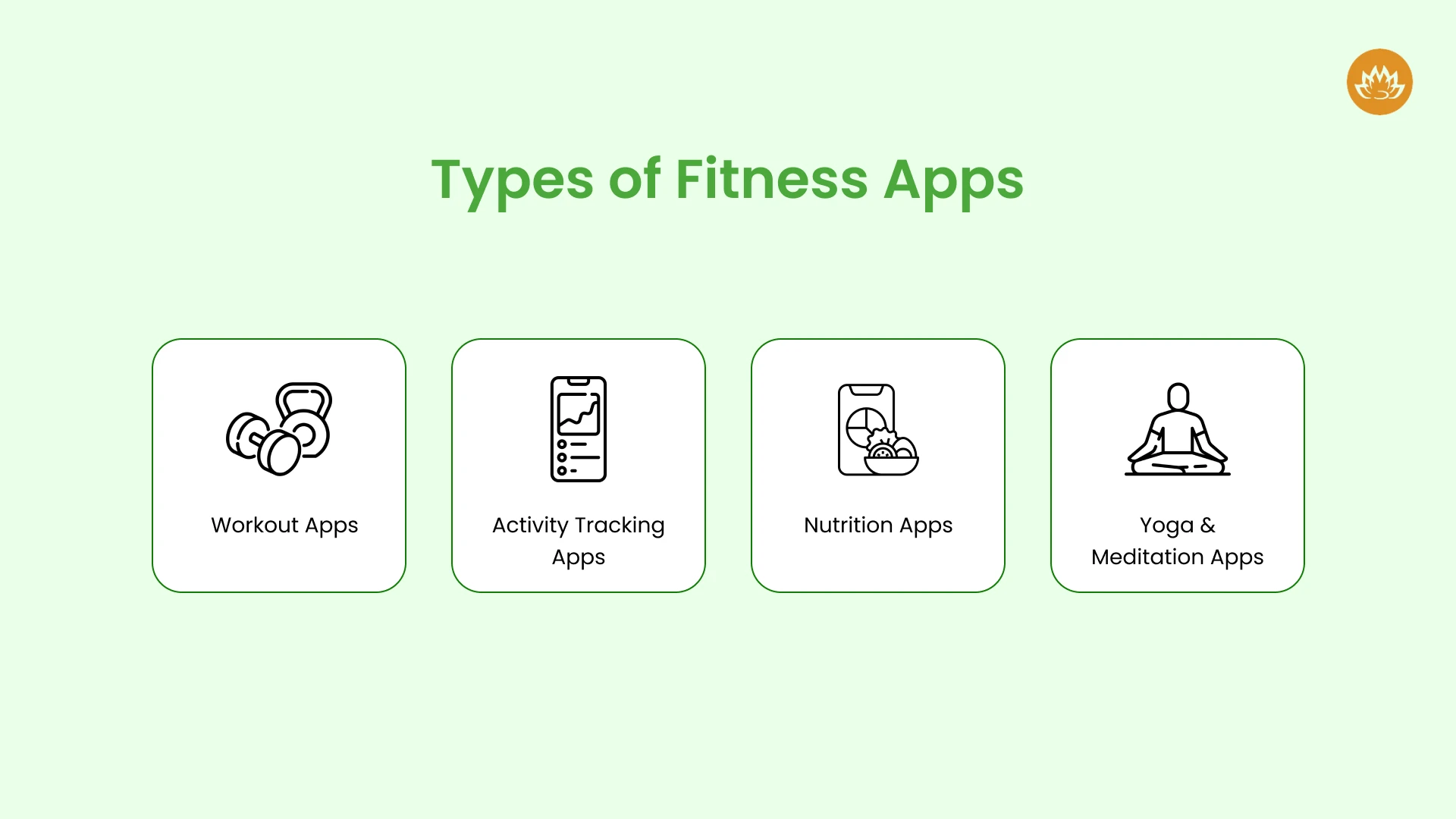
Workout Apps
These apps provide well-organized workout routines and recommend exercises that are personalized to your fitness goals. These include exercises for weight loss and muscle building. Workout apps include instructional videos, track progress, and customize plans. These apps are highly in demand and inspire users to improve their health phenomenally.
Activity Tracking Apps
A wearable fitness app can help you monitor your daily routine through sensors. Based on your daily activity levels, it tracks down vital metrics like how many steps you walk in a day, no. of calories burned, sleeping patterns, and the distance you travel daily. This data motivates users to stay fit and healthy, inspiring them to remain active.
Nutrition Apps
Nutrition apps are mainly used to monitor dietary habits. This is because diet is crucial in building a healthy and fit body. It also plays a crucial role in achieving fitness goals. Hence, the demand for such fitness apps is immense. In addition, you can use powerful UI/UX elements and designs to create a visually appealing nutritional application that can change the game of the way people consume food.
Yoga and Meditation Apps
Yoga and meditation apps promote the growth and development of mind, body, and soul. They offer regular yoga and meditation sessions, promote relaxation, reduce stress levels, and achieve mindfulness. If you find a considerable group of target audience needing such an app, you can hire a mobile app development company with experience in converting your great idea into a phenomenal fitness app.
Top Features of Fitness Application
Building apps that can help users achieve fitness goals with AI-powered mobile app development is a trend nowadays. Users love features that can provide them with personalized recommendations and offer achievable fitness milestones. As a leading mobile app development company, we have undertaken many fitness app development projects that were powered by robust AI tools and integrated with almost all the features.
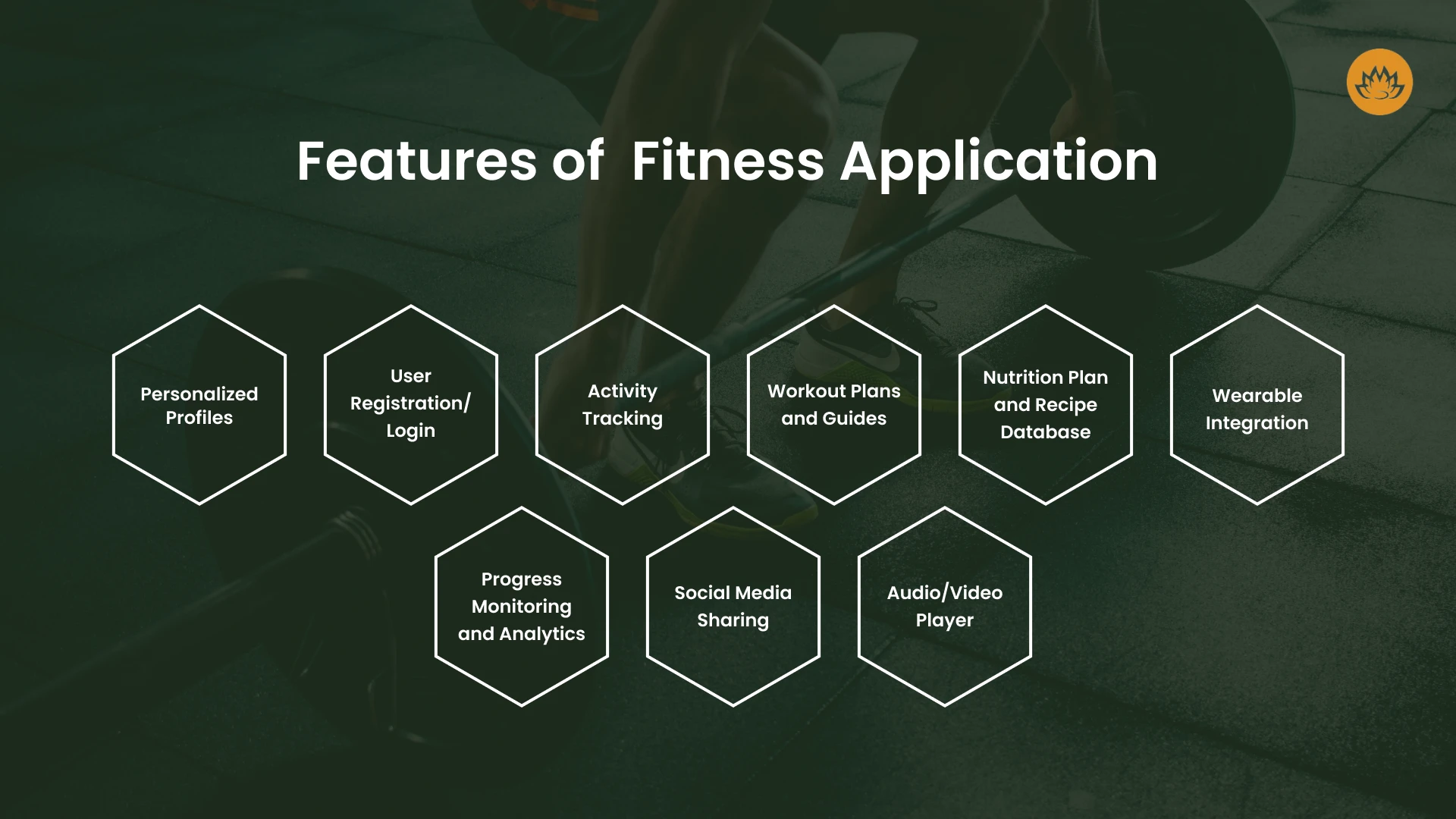
Personalized Profiles
It allows users to input necessary information, such as age, height, weight, and fitness goals. Users can use individual metrics to personalize workout routines, dietary charts, and attainable fitness goals.
User Registration/Login
Users need to create personal accounts and access the app with credentials or through other social accounts, such as Facebook and Instagram.
Activity Tracking
It facilitates users’ knowing crucial metrics about themselves, such as steps taken, heart points, calories burned, distance traveled, and active minutes. This is obtained by integrating various wearable devices and smartphone sensors.
Workout Plans and Guides
This feature offers users a prescribed set of exercises and gives them the flexibility to create their own workout plans. It caters to user preferences and focuses on their objectives. To make this entire journey fun, these fitness apps provide media formats, photos, 3D animated models, and video illustrations.
Nutrition Plan and Recipe Database
Users can track their food consumption and hydration levels. This feature also integrates with several databases, such as recipes and food items, further facilitating the achievement of weight management goals.
Wearable Integration
With AI-powered and sensor-based wearables, fitness apps help users track their health data on a single platform backed by powerful analytics, providing holistic wellness benefits and the ability to make informed decisions.
Progress Monitoring and Analytics
Users can track their progress and visualize all milestones to maintain accountability. The app provides detailed analytics and progress reports, including weight, fitness milestones, body dimensions, and goal setting.
Social Media Sharing
Users can integrate their fitness performance and achievements with social media platforms. They can showcase their achievement to the global community and make users feel motivated, joyful, and recognized.
Audio/Video Player
Audio/video player integration helps users access instructional videos, workout playlists, and sessions within the app. These features motivate users to use fitness activities such as exercise plans, yoga suggestions, running, and meditation.
Fitness App Creation: Step-by-Step Development Process
Developing a fitness app involves several stages. It needs a solid process-oriented approach driven by business acumen. This phase involves strategic execution and careful consideration.
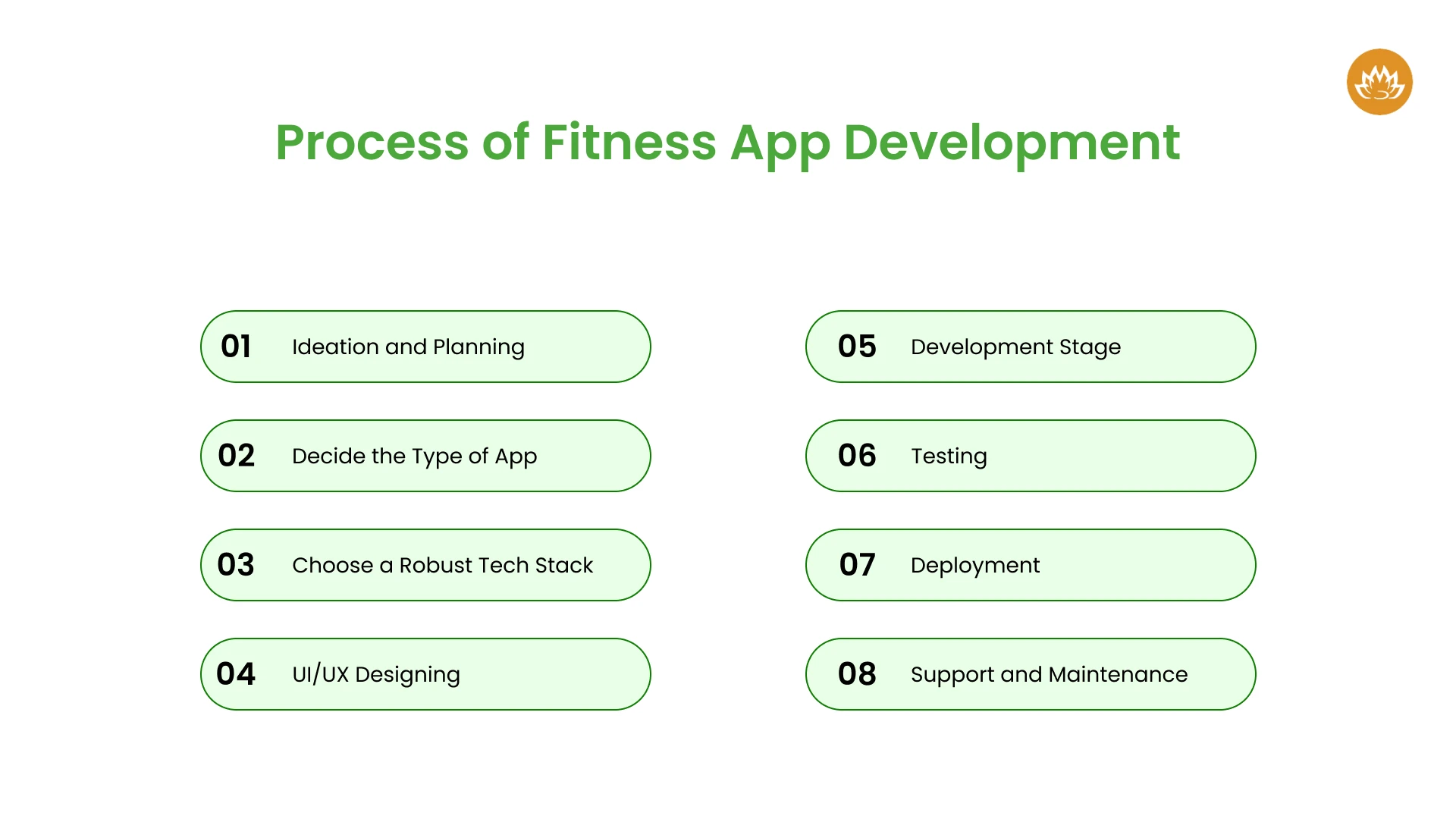
Ideation and Planning
- Determine the objective for fitness app development, its key features, and the target audience.
- Decide on the specific area of fitness activity you want to target and provide an extensive platform with diverse functionalities.
- Evaluate market trends, identify potential gaps, choose the right category of app you wish to build, and finalize the essential features you want to integrate.
Decide the Type of App
- Know your target audience— their preferences, choices, and pain points
- Find the correct type of fitness apps that can cater to their unfulfilled needs.
- It can be anything from building a workout planner to a community platform or nutrition tracker.
Choose a Robust Tech Stack
- Use the correct set of technologies to develop a fitness app
- Whether mobile or web app development, choose the most suitable front-end and backend technologies and frameworks to build a dynamic fitness app.
- We suggest Flutter is the best choice for fitness app development as it helps you develop an app for multiple platforms by using a single codebase, saving time and costs.
- Select the appropriate database, cloud service platform, and API integration tool to develop your fitness app.
UI/UX Designing
- Design a compelling and attractive UI/UX for your unique fitness app.
- Make it intuitive and engaging by creating powerful visual elements aligning with the user persona and your business goals.
- Use subtle color schemes, iconography, and typography.
Development Stage
- Hire the best fitness app development services to create a comprehensive fitness app for your target audience.
- The stages are building the frontend and backend interfaces, integrating with necessary APIs and third parties, choosing the relevant platform—iOS, Android, or cross-platform—and hiring the right developers who know programming languages.
Testing
- After developing your product and before deploying it into the market, you must send your product for testing and quality assurance.
- You can identify and fix bugs, glitches, or errors at this stage.
- You can perform manual testing, seek help from QA engineers, and perform automated testing using various testing frameworks to ensure app usability.
Deployment
- Your app is now ready to deploy at this stage.
- You can upload it to target platforms like Apple App Store and Google Play Store.
Support and Maintenance
- Seek for continuous support and maintenance services to stay ahead of your competitors.
- You must monitor your app performance, address user feedback, fix issues, perform data analysis, and release regular updates at this stage.
Cost of Developing a Fitness App
The cost of developing a unique fitness app is based on factors such as app complexity, UI/UX design, third-party integration, regulatory compliance, development team, and the kind of monetization model you choose for your fitness app.
However, the cost of developing a basic fitness app ranges from $30000 to $100000, while the cost of developing a complex app with advanced features can range between $100000 and $300000.
We suggest you opt for a Minimum Viable Product (MVP) to minimize your fitness app development cost. Developing an MVP with limited features before building your final product will help you obtain user feedback and make necessary changes to make it worthy of obtaining funding from investors.
Conclusion
Developing a fitness app with Whitelotus Corporation will provide you with immense avenues for earning huge profits, as we have the knack for converting robust ideas into a successful mobile app. With years of hands-on experience building successful mobile and web applications, we have always set a benchmark for delivering the best to our customers. We strongly focus on user-centric designs, industry compliances, scalability, and security, ensuring your fitness app meets user expectations.
Whitelotus Corporation is a leading fitness application development company that delivers robust mobile and web applications. You can hire dedicated developers from Whitelotus Corporation to build small—and large-scale fitness applications. We know how to harness the tools and functionalities of various technologies to create the best solutions that will meet your expectations.
FAQs
What are the various monetization models of fitness apps?
There are several monetization models from which you can choose to build your fitness app, like the freemium model, advertising, subscriptions, and data monetization.
What are emerging trends in fitness application development?
Some of the top emerging trends in fitness application development are wearable integration, such as smartwatches, the inclusion of gamification elements, AI-enabled fitness apps, virtual fitness classes and training apps, and social media implementation for community building.