What are AI Agents? How Do They Work?
Phases Of AI Agents: A Continuous Process

Perception and Processing of Data
Making and carrying out decisions
Adaptive Learning and Continuous Improvement
Multi-Agent Collaboration
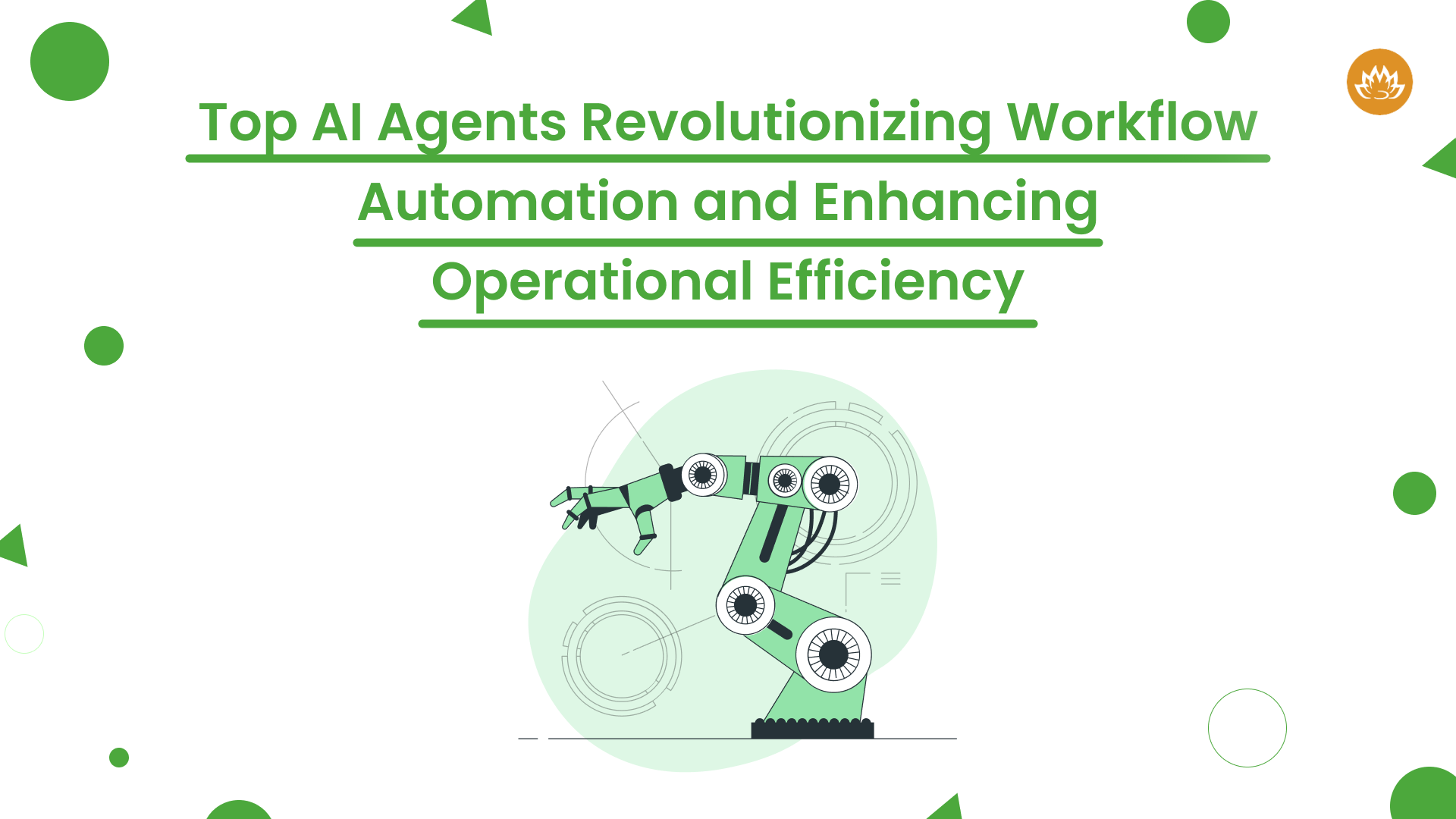
Top AI Agents For Workflow Automation and Enhancement of Operational Efficiency

Key Components: Sensors, Actuators, No Memory, Condition-Action Rules
Use Cases: Thermostats, General Security Systems, Automated Lighting, and Spam Filters
Goal-Based Agents
Key Components: Finding Goals, Planning, Decision-Making Process, and Feedback Mechanism
Use Cases: Route optimization, Automated Recruiting, Resource Allocation, and Workflow Management
Model-Based Reflex Agents
Key Components: Internal Model, State Tracking, Sensors & Actuators, Short-Term Memory
Use Cases: Smart Home Thermostats, Predictive Maintenance, Context-Aware Chatbots, and Adaptive Traffic Signals.
Utility-Based Agents
Key Components: Utility Function, Adaptive Logic, Trade-off Analysis, and Performance Monitoring
Learning Agents
Key Components: Learning Element, Performance Element, Critic, Problem Generator
Use Cases: Fraud Detection, Voice Assistants, Personalized E-learning, Predictive Analytics
Multi-Agent Systems
Key Components: Collaboration mechanisms, Specialized Agents, Communication Protocols, and Conflict Resolution
Use Cases: Smart Power Grids, Supply Chain Coordination, Autonomous Fleet Management, and Distributed Robotics
Proactive Agents
Key Components: Predictive Analysis, Context Awareness, Preemptive Action, Self-Improvement
Use Cases: Smart scheduling tools, Maintenance alerts, Marketing Campaigns, and Customer Retention