Advantages of AI in Education
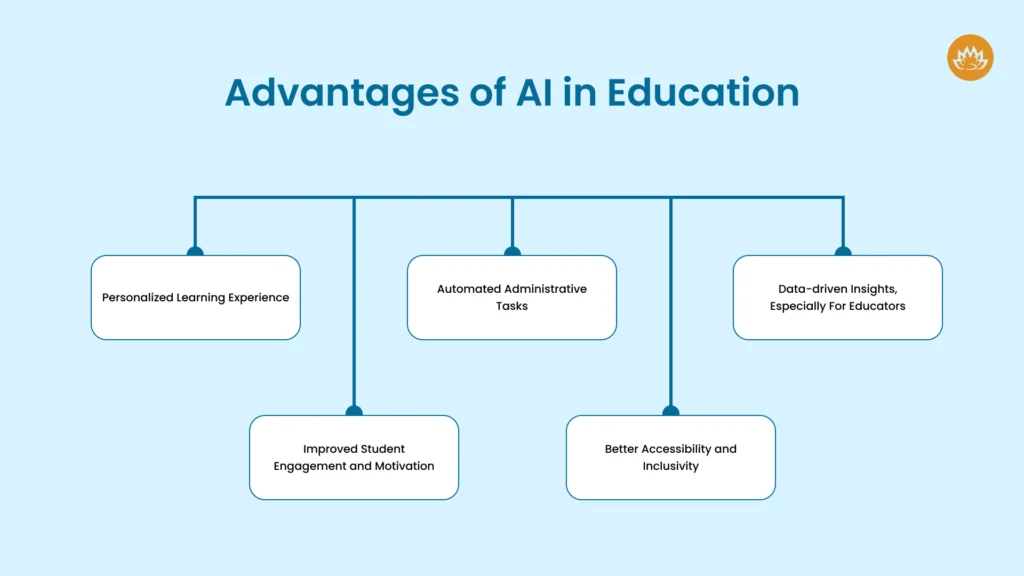
Personalized Learning Experience
AI for personalized learning uses machine learning, natural language processing, and predictive analytics to instantly adjust the pace, content, and feedback to each student’s unique needs. AI-powered platforms create dynamic learning paths shaped by each student’s prior knowledge, skills, gaps, and pace, rather than delivering a single curriculum to every learner at the same pace.
Because learners have different abilities, speeds, and backgrounds, traditional teaching approaches can cause students to struggle. However, by adapting instruction and providing immediate feedback and support, AI in education can help close these gaps.
Improved Student Engagement and Motivation
If students don’t want to study, how can AI help? Through gamification, progress bars, virtual simulations, and collaborative tools, AI-powered tools make learning dynamic and engaging.
With appropriate difficulty levels and inspiring content, adaptive platforms keep students engaged by adjusting content based on their progress and responses. Learning platforms provide immersive experiences through the use of chatbots and virtual assistants, which encourage active involvement and reduce bounce rates.
Automated Administrative Tasks
One benefit of AI in education is its ability to streamline administrative tasks. Several tools already help teachers with class scheduling, grading, and attendance monitoring so that they can focus on interaction and instruction.
Teachers and AI chatbots currently collaborate closely, increasing productivity, saving time, and answering questions promptly.
Better Accessibility and Inclusivity
AI tools provide students with different disabilities with personalized learning and customized educational programs. They help make both online and offline courses inclusive by offering speech-to-text conversion, real-time translations, and adaptable content.
Additionally, artificial intelligence can help students with ADHD, dyslexia, and other challenges fully master content and identify learning difficulties as early as possible.
Data-driven Insights, Especially For Educators
It is hard to overstate the importance of AI in education since it offers deep insights into student performance and possible problems in addition to personalizing instruction, increasing engagement, and lightening the workload for teachers.
Artificial intelligence helps teachers identify students who are lagging, adjust their teaching methods, and enhance the curriculum by evaluating responses and personal data.
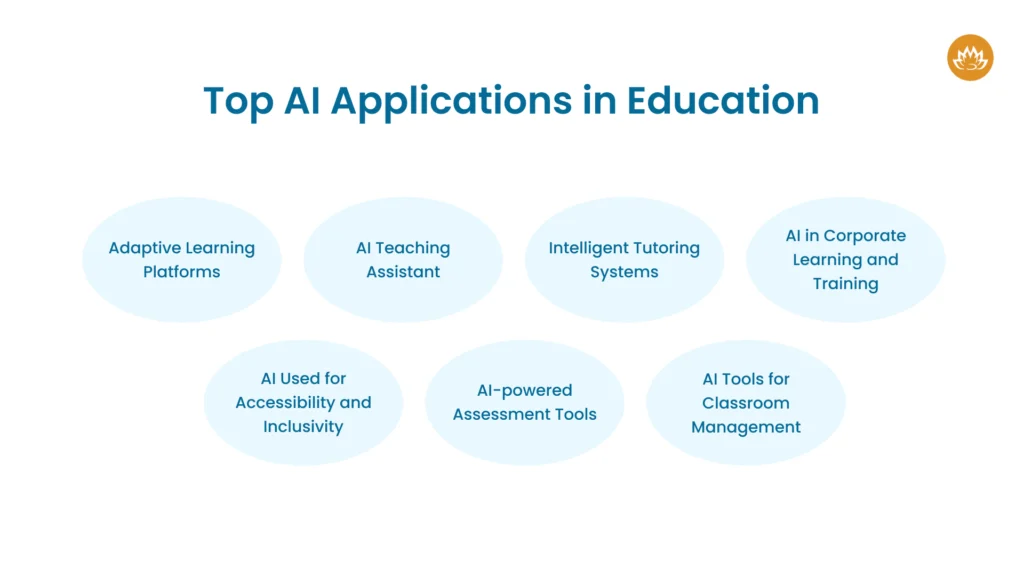
Top AI Applications in Education
Adaptive Learning Platforms
These platforms use AI to tailor instructional materials to a student’s knowledge, challenges, and progress. They are frequently used in professional training programs, colleges, and educational institutions to improve learning effectiveness.
Adaptive AI technologies in education help students avoid boredom, and teachers support struggling students by adjusting class complexity, suggesting topics, and recommending resources. These tools enhance learning by using gamification, mobile flexibility, and real-time feedback.
AI Teaching Assistant
Teachers often can’t devote the same time and effort to every student because each student has unique talents, limitations, and personal characteristics. That’s where AI in teaching comes in. We are talking about AI teaching assistants.
To reduce teachers’ workload, these companions automate repetitive tasks, answer frequently asked questions, and evaluate student achievement. AI teaching assistants benefit both parties and are rapidly evolving, adding new features to their toolkit.
Intelligent Tutoring Systems
There are some great applications used with AI in education that mimic human teachers and offer on-demand support in real time. Using natural language processing and machine learning capabilities, they keep up with the conversations and help students comprehend complex topics with simplicity and higher engagement.
AI in Corporate Learning and Training
AI applications in education aren’t limited to educational institutions. By providing individualized educational programs, skill gap analysis, real-time grading, interactive simulations, and progress tracking, they are also revolutionizing professional training.
Businesses commonly use AI-powered learning management systems to adapt training programs to employees’ jobs, knowledge, and abilities. AI chatbots also help complete tasks and provide immediate support when needed. As a result, company owners make sure of providing efficient onboarding and training.
AI Used for Accessibility and Inclusivity
When it comes to helping pupils with impairments and learning challenges, artificial intelligence is indispensable. For instance, real-time translation helps people with language problems, while speech-to-text capabilities support learners who are hard of hearing. Certain AI-based algorithms can identify dyslexia, ADHD, and other issues that make learning challenging.
Together, AI and personalized learning may increase the flexibility of education and provide safe, convenient learning environments for students with a range of needs.
AI-powered Assessment Tools
Platforms that simplify and speed up class preparation are a dream for millions of instructors worldwide. So why not use AI to build a platform that creates lessons? These platforms can produce content automatically, develop individualized lesson plans, provide resources, support multimedia, and include collaborative tools for more comprehensive learning.
AI Tools for Classroom Management
Challenges of Implementing AI in Education
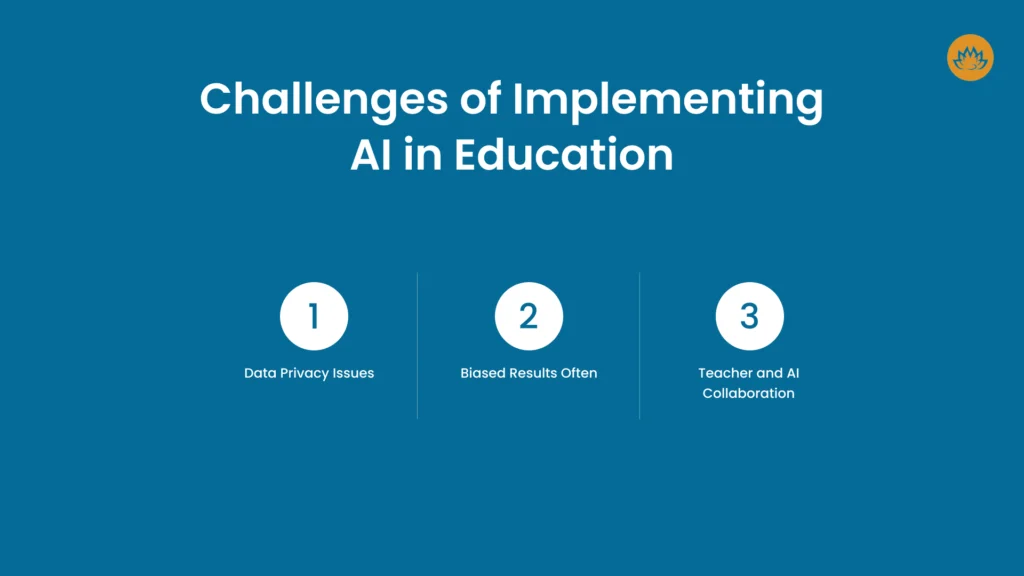
Data Privacy Issues
AI-powered products require vast amounts of data to function properly. You need personal information, academic performance, and online activity, which presents privacy and security issues. Data poisoning, breaches, and exploitation can arise from the violation or misuse of sensitive information.
Thankfully, this negative impact can be minimized by encouraging participants to secure their data. All schools and educational institutions must comply with GDPR and must have strong privacy policies.
Biased Results Often
Teacher and AI Collaboration
Because they fear computers may eventually replace them, some educators are resistant to adopting AI in the classroom. Even if AI systems offer lesson preparation, automated testing, and individualized learning, these teachers must know that they still require human mentorship and emotional support.
To overcome this obstacle—or rather, this fear—teachers must be trained to incorporate AI tools into their lesson plans while retaining full control over the learning process. The best strategy is for AI to assist educators by handling monotonous work so they can focus on holistic growth and stronger relationships with pupils.