Why AI is Crucial For Modern Businesses
- Automate repetitive workflows
- Personalize customer interactions
- Improve forecasting and planning
- Reduce operational costs
- Predict customer behavior
- Strengthen security
AI in Food Delivery: Customers Get Faster and Smarter Responses
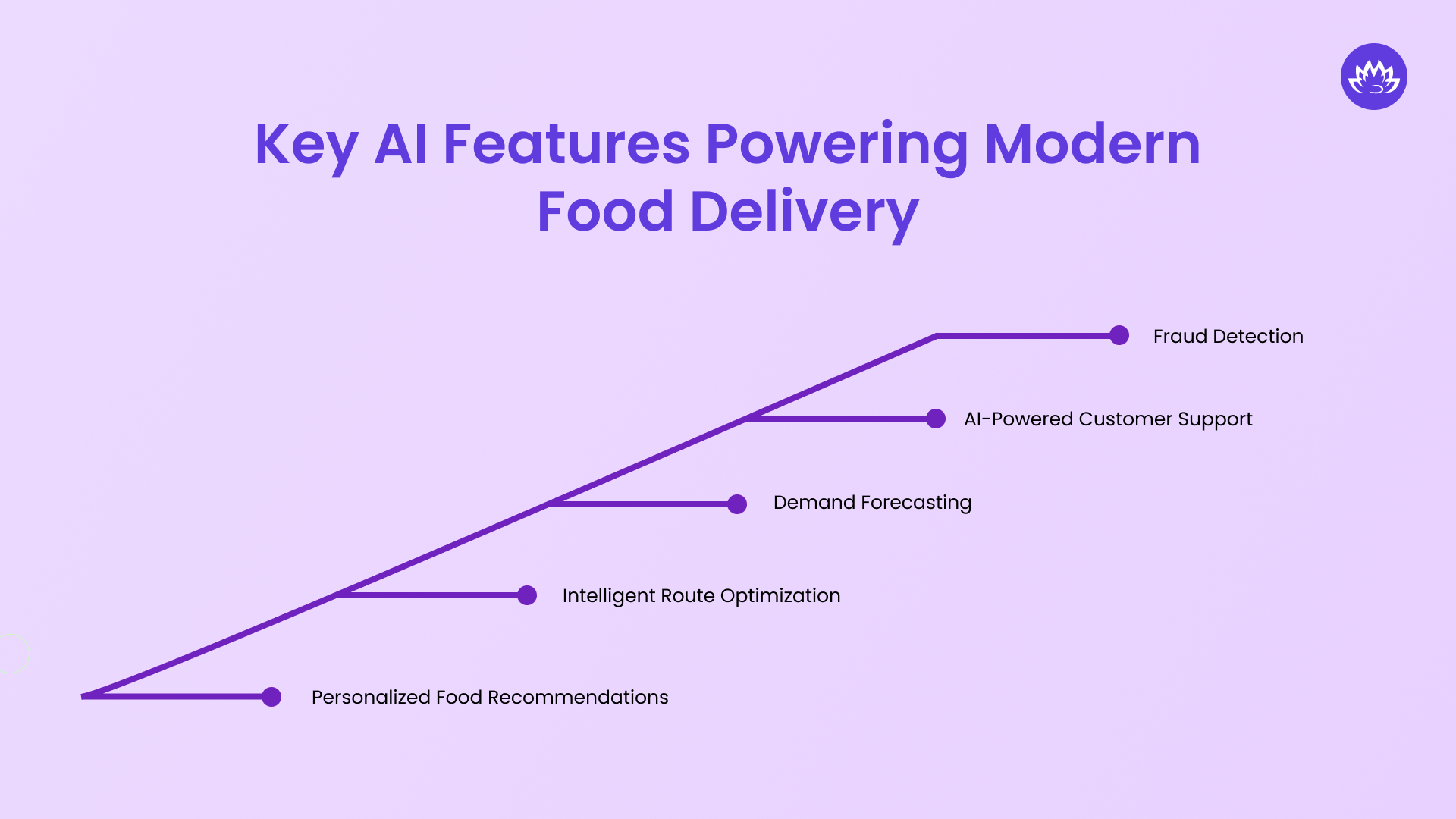
Personalized Food Recommendations
- Dietary preferences
- Ordering time
- Spending habits
- Seasonal trends
- Top and favorite cuisines
Intelligent Delivery Route Optimization
Traffic conditions can change in a few minutes. AI will continuously analyze road closures, driver locations, weather conditions, live traffic, and restaurant preparation times. Based on all this information, AI dynamically recommends the fastest delivery route. The top benefits are:
- Shorter delivery times
- Reduced fuel usage
- More deliveries are finished by each driver
- An increase in client satisfaction
AI constantly adjusts to changing circumstances rather than relying on fixed GPS routes.
Demand Forecasting
Restaurants frequently struggle to strike a balance between staffing and inventory.
Waste results from excess inventory.
Too little leads to angry consumers and delayed orders.
To forecast future demand, AI examines past sales and factors such as weekends, holidays, sporting events, weather trends, and regional festivals.
Then, restaurant owners can:
- Effectively schedule personnel
- Properly stock ingredients
- Cut down on food waste
- Boost revenue
AI-Powered Customer Support
These days, a lot of meal delivery services use AI chatbots to quickly respond to typical consumer requests like:
- Status of the order
- Requests for refunds
- Items that are missing
- Updates on delivery
- Details about the restaurant
Customers obtain prompt assistance as support teams focus on more complex problems, rather than waiting several minutes for human service.
Fraud Detection
Every day, food delivery companies handle thousands of transactions.
AI always keeps an eye on odd activity, like:
- Fake accounts
- Untrustworthy payment behavior
- Abuse of coupons
- Refund requests that are repeated
Businesses can drastically lower financial losses by identifying fraudulent patterns early
AI in Fleet Management: Making Efficient Transportation
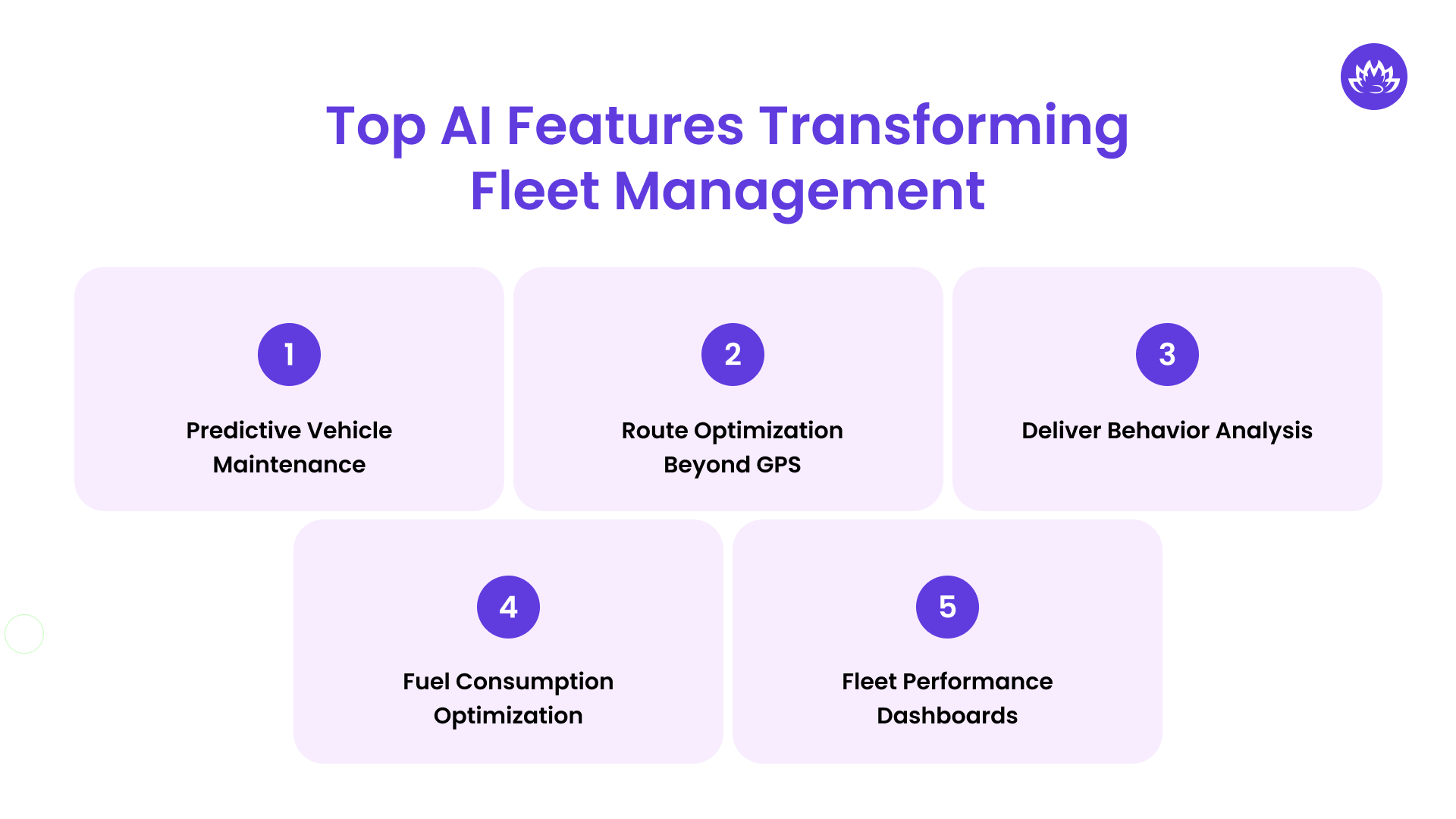
- Safety of driver
- Vehicle health
- Fuel consumption
- Delivery performance
- Route efficiency
- Maintenance schedules
Predictive Vehicle Maintenance
Fixed intervals are the foundation of traditional maintenance programs.
Every car, however, encounters unique driving circumstances.
AI regularly examines information gathered from car sensors, such as:
- Performance of the engine
- Brake deterioration
- Condition of oil
- Tire pressure
- Battery condition
AI anticipates possible faults before they occur rather than waiting for a breakdown.
Advantages consist of:
- Better security
- Extended longevity of vehicles
- Lower repair expenses
- Reduced downtime for vehicles
Route Optimization Beyond GPS
AI considers several factors at once, in contrast to traditional guidance systems.
Among them are:
- Weather predictions
- Schedules for drivers
- Traffic in real time
- Building roads
- Fuel efficiency and delivery considerations
As a result, routing is optimized to reduce operating expenses and eliminate delays.
Deliver Behavior Analysis
Fuel costs, vehicle wear, and accident rates are all significantly impacted by driver performance.
AI keeps track of driving habits like:
- Severe braking and speeding
- Quick acceleration
- Too much idle
- Accurate cornering
Fleet managers are provided with comprehensive information to enhance driver education and promote safer driving practices.
Fuel Consumption Optimization
For fleet operators, fuel is one of the highest operating costs.
AI finds wasteful fuel use by examining:
- Condition of Vehicle
- Driving behaviors
- Route effectiveness
- Time spent idle
- Delays in traffic
For a large fleet, even minor upgrades can yield significant annual savings.
Fleet Performance Dashboards
AI creates consolidated dashboards by combining data from GPS devices, IoT sensors, maintenance logs, and operational data.
Supervisors have rapid access to:
- Availability of vehicles
- Performance of delivery
- Alerts for maintenance
- Fuel efficiency and driver productivity
Decision-makers gain actionable insights instantly rather than having to go through dozens of spreadsheets.
AI in Healthcare: Care Provided Beyond the Hospital
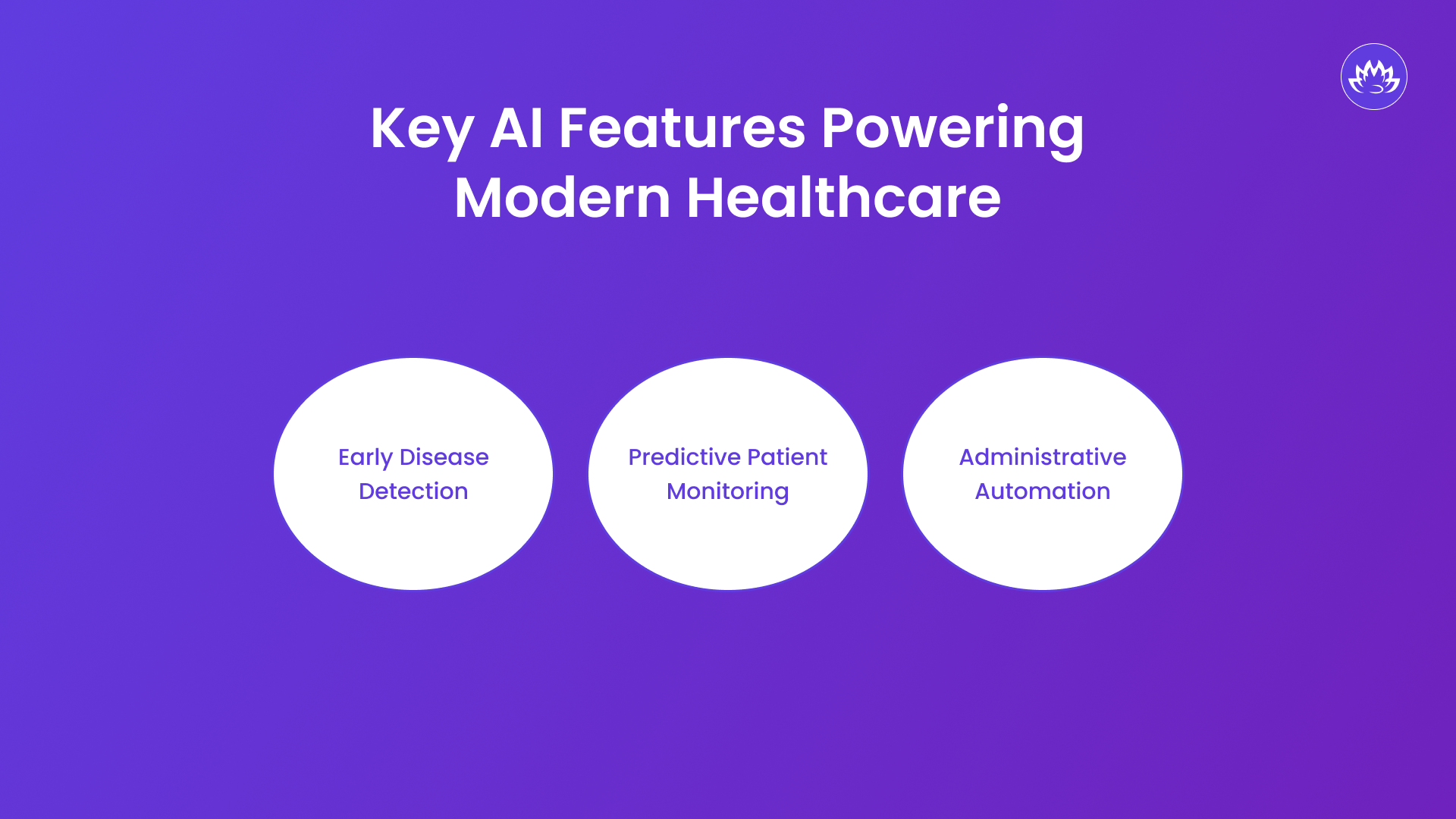
Early Disease Detection
AI-driven diagnostic tools can spot subtle patterns in medical images that indicate early warning signs of conditions such as pneumonia, diabetic retinopathy, or cancer. Such kind of technologies function as decision-support systems. They assist clinicians in identifying problems more rapidly and precisely, rather than replacing doctors.
Predictive Patient Monitoring
Hospitals are using AI more frequently to track patients’ vital signs in real time. AI can notify medical teams of possible issues before they become serious by examining patterns in blood pressure, heart rate, oxygen levels, and other health markers. This can lead to better patient outcomes and allow for earlier intervention.
Administrative Automation
AI simplifies administrative duties such as appointment scheduling, medical coding, billing support, and paperwork, in addition to patient care. Healthcare workers can devote more time to patient care when the administrative load is reduced.
AI in Retail and eCommerce: Shopping Experiences Personalized
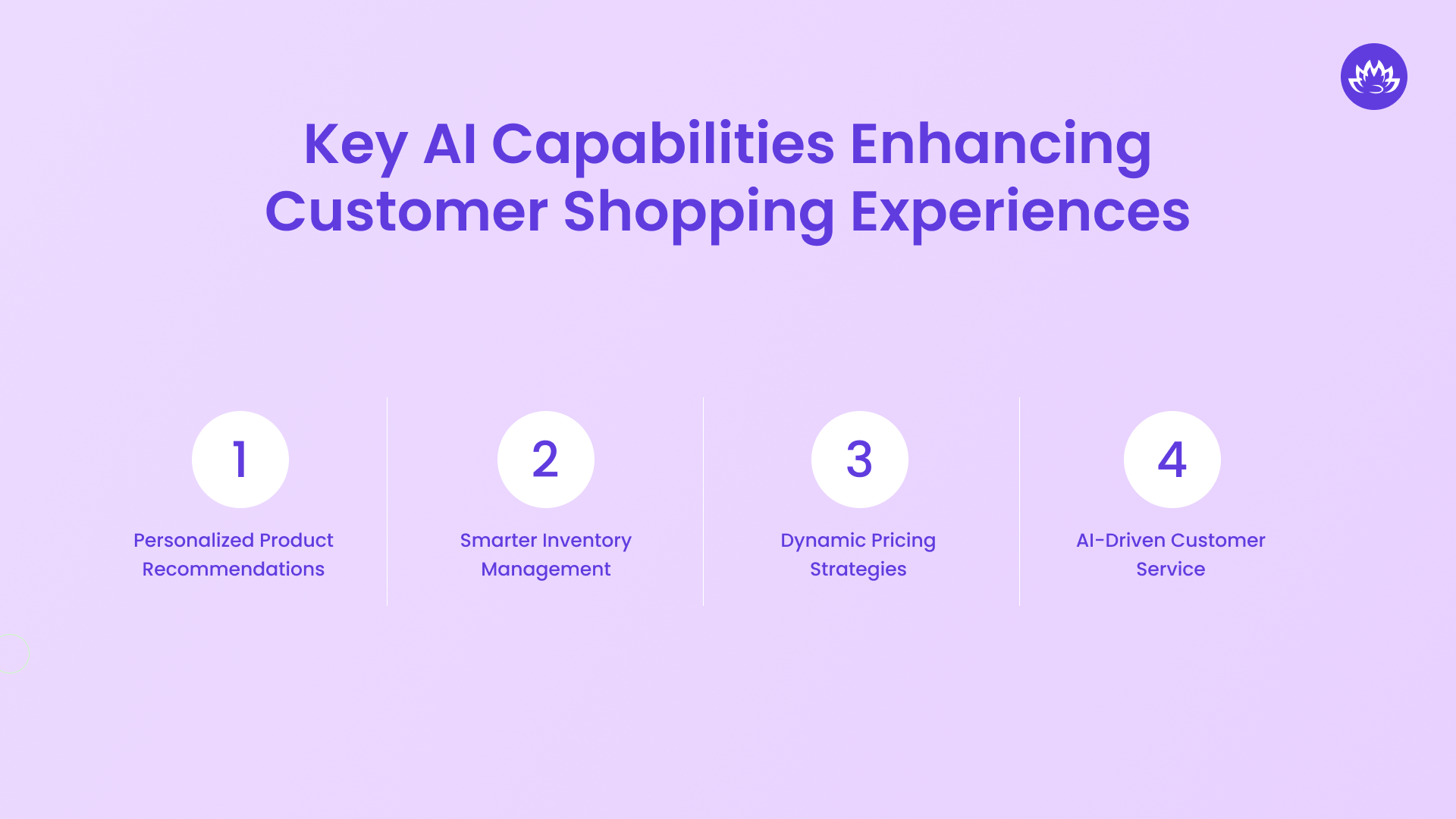
Personalized Product Recommendations
To suggest products more likely to appeal to specific customers, Artificial Intelligence (AI) analyzes browser history, purchase behavior, search patterns, and client preferences. Such tailored recommendations boost average order value, promote repeat purchases, and enhance the shopping experience.
Smarter Inventory Management
Keeping the proper amount of goods on hand is never easy. By analyzing past sales, seasonal patterns, promotions, and market behavior, AI predicts product demand. Retailers can minimize surplus inventory, lessen supply shortages, and better adapt to shifting consumer demand.
Dynamic Pricing Strategies
AI-driven pricing systems constantly assess variables like client demand, inventory levels, rival prices, and purchase patterns. This makes it possible for companies to make wise price adjustments that help them maximize profits while maintaining their competitiveness.
AI-Driven Customer Service
These days, a variety of consumer questions are handled by virtual assistants and AI chatbots, including product suggestions, purchase tracking, and return requests. These tools increase customer satisfaction and reduce effort for support staff by providing immediate assistance around the clock.
AI in Manufacturing: Building Smarter Factories
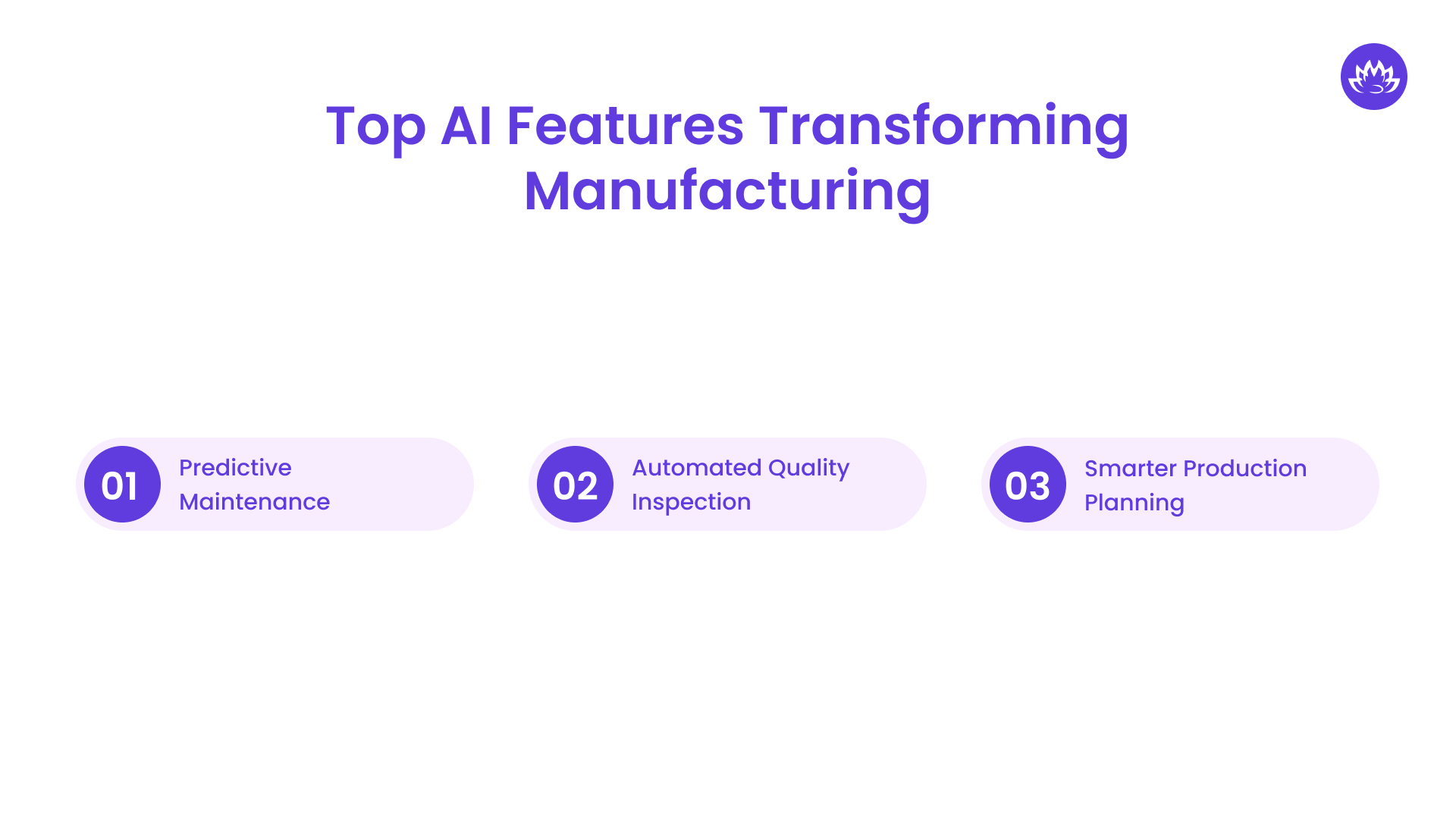
Predictive Maintenance
A production line can come to a complete stop due to unforeseen machine problems. AI continuously analyzes data from sensors mounted on machinery to help prevent these interruptions.
It keeps track of things such as temperature, vibration, pressure, motor efficiency, and energy usage.
The system notifies maintenance crews before a malfunction when anomalous patterns appear. This proactive strategy prolongs the life of costly equipment, avoids downtime, and lowers repair costs.
Automated Quality Inspection
Conventional quality checks often rely on manual inspection, which can be laborious and error-prone.
Real-time product inspection is made possible by AI-powered computer vision systems, which are remarkably accurate at detecting flaws such as scratches, improper dimensions, or assembly issues. Items that don’t meet quality standards can be removed right away, reducing waste and ensuring uniformity.
Smarter Production Planning
Predicting demand, assessing inventory levels, and locating supply chain bottlenecks – AI can do all this with great efficiency. AI also assists manufacturers in balancing production schedules. As a result, factories may minimize extra inventory and production delays while producing what customers actually need.
AI in Logistics and Supply Chain: Moving Goods With Efficiency
Supply chains, which span several nations, transportation networks, suppliers, and warehouses, have grown more intricate.
AI facilitates quicker decision-making and greater visibility, helping companies make sense of this complexity.
Demand Forecasting
Predicting consumer demand accurately has never been easy.
AI examines past sales data in addition to variables like:
- Demand during certain seasons
- Trends in the market
- Campaigns for promotion
- The state of the economy
- Patterns of the weather
Businesses can reduce shortages and excess inventory by using this data to stock the appropriate products at the appropriate times.
Warehouse Automation
To increase efficiency, modern warehouses are increasingly relying on AI-powered solutions.
AI helps with:
- Space optimization
- Order priortization
- Monitoring inventory
- Automated packaging and picking
- Planning the workforce
Warehouses can process orders faster and more precisely by minimizing manual labor.
Shipment Visibility
Consumers increasingly demand total transparency at every stage of the delivery process.
AI provides precise delivery estimates and proactively alerts clients to delays by combining GPS monitoring, IoT sensors, weather updates, and traffic data.
In addition to helping logistics companies better handle interruptions, this increases client trust.
Beyond the above industries, AI has had a significant impact on many others, including banking and finance, customer services, human resources, and insurance.
AI-Powered Businesses Hold The Future
It is not just about doing experimental projects with AI. Artificial Intelligence has become a practical business tool across all industries, reshaping their future slowly and steadily.
AI is producing real value in almost every industry. Starting from helping restaurants forecast consumer demand to empowering fleet operators to optimize routes, or, from helping doctors make early diagnoses to helping merchants customize shopping experiences. Businesses that adopt these technologies now are creating more robust, flexible, and customer-focused enterprises for the future, not just increasing productivity.
Rather than embracing technology for its own sake, the real opportunity lies in selecting AI solutions that address real business concerns. AI can simplify processes, enhance decision-making, reduce costs, and unlock previously unattainable development opportunities with the right approach.
So, if you want to build an intelligent food ordering platform, or modernize your transportation operations, or develop a custom AI-powered business application, partner with an experienced AI development company. Whitelotus Corporation helps businesses transform ideas into scalable digital solutions through advanced AI development. We provide custom software engineering, fleet management app development services, and food delivery app development services. We combine industry expertise with modern AI capabilities. We help organizations innovate speedily and stay competitive in this ever-growing A I-driven world. Contact us to know more about our services.