Artificial intelligence is no longer a choice now in 2026. It is a necessity and considered mainstream, influencing daily business operations across the globe. AI is embedded in various business tools for smooth functioning on a daily basis. If you want to maintain customer relationships or streamline operations or make strategic decisions that deliver impactful results, AI is here to support and help businesses thrive with confidence and success. Companies now approach an experienced AI development team that can help them harness AI potential and drive organic traffic to their business.
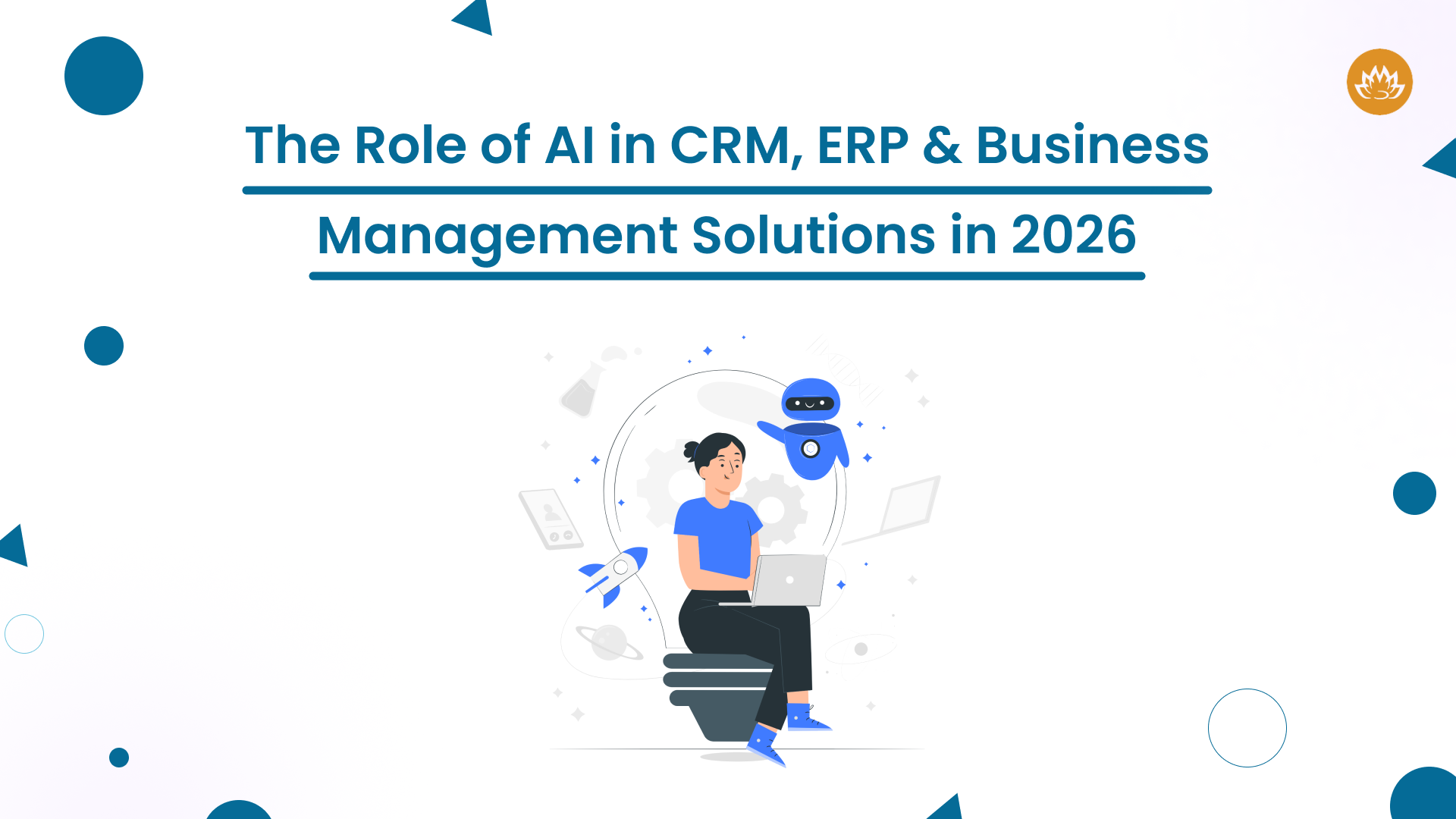
Likewise, AI has redefined some core business functions such as CRM, ERP, and broader business management systems. These three have remained the backbone of enterprise operations for over a decade. Soon, AI has entered into the equation, and all three have evolved tremendously and have become far more intelligent decision-making engines.
So let us explore how AI can transform these systems and understand why AI is so important for modern businesses.
Major Shift From Data Management to Intelligence
Traditional business systems store and organize data – that is what we know so far. However, the AI revolution has changed the entire business ecosystem at its roots. Now, companies can choose to drop human intervention and mostly rely on AI tools and technologies. Now, you don’t need to record transactions, track customer interactions, and generate reports. Everything is done by AI, including its ability to always go one step ahead. It can predict outcomes, recommend actions, and make automated decisions. This shows how powerful force AI is through the way it has changed the shift from data management to intelligence.
AI Transforming CRM - Customer Relationships
The goal of CRM systems has always been to increase customer involvement. They take a few steps further with AI, automatically putting findings into action.
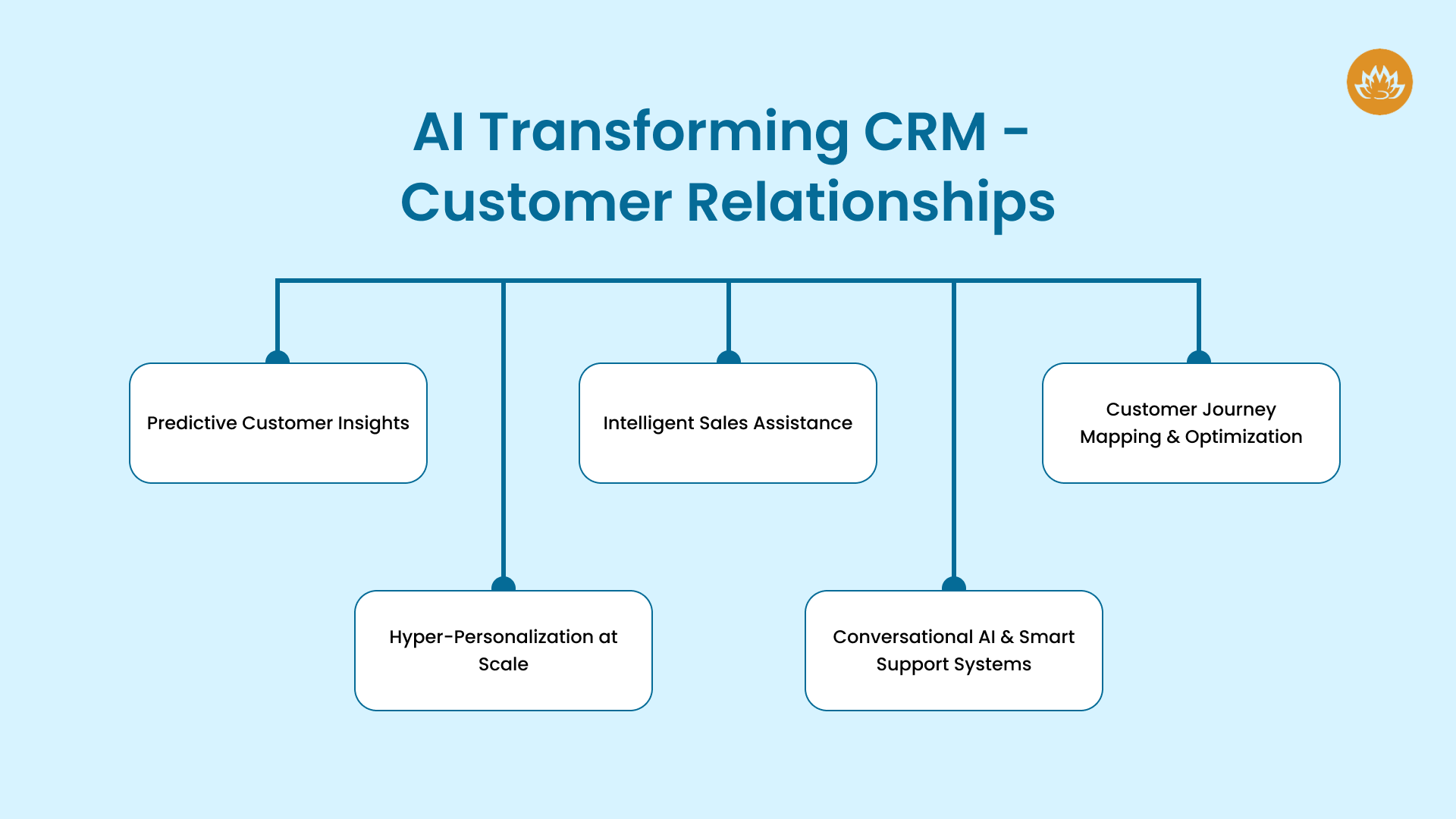
Predictive Customer Insights
AI will analyze historical data, interaction history, and behavioral patterns to understand and predict customer preferences. This will help businesses to:
- Identify churn risks before it happens
- Forecast future purchases
- Customer segmentation with high precision
Now, businesses can anticipate customer behavior before reacting to such instances.
Hyper-Personalization at Scale
AI has now taken personalization to a far higher level. AI-driven personalization includes several things, such as:
- Product recommendations according to browsing behavior
- Dynamic email content with user preferences that are customized
- Personalized pricing or offers
Intelligent Sales Assistance
AI can now behave like a virtual sales assistant and help teams organize activities with prioritization and better performance. Some of the key capabilities are:
- Lead scoring according to conversion probability
- Next follow-up actions suggestions
- Forecasting sales pipeline
Sales teams can now rely more on data-backed guidance instead of intuition and guesswork.
Conversational AI & Smart Support Systems
There are AI-powered chatbots and virtual assistants now to help businesses enhance customer service and experiences. Some of the core benefits of these tools are:
- Provides 24/7 availability
- Resolves query instantly
- Provides context-aware conversations
Besides answering queries, AI also provides:
- Detection of customer sentiment
- Escalation of critical issues automatically
- Suggesting solutions to support agents
Customer Journey Mapping & Optimization
AI can also track and analyze the entire customer journey at various touchpoints. With this benefit, enterprises have now optimized conversion paths and improved overall customer experiences. They can identify friction points and get smoother results with a more intuitive journey, resulting in higher customer engagement.
As a growing enterprise, if you seek to integrate AI into your core CRM, you must approach a highly professional and experienced AI development company. Their group of AI developers will help you with good-quality AI integration into CRM services.
With this setup, you can run heavy computations in a different thread, and the UI will remain responsive as you wanted.
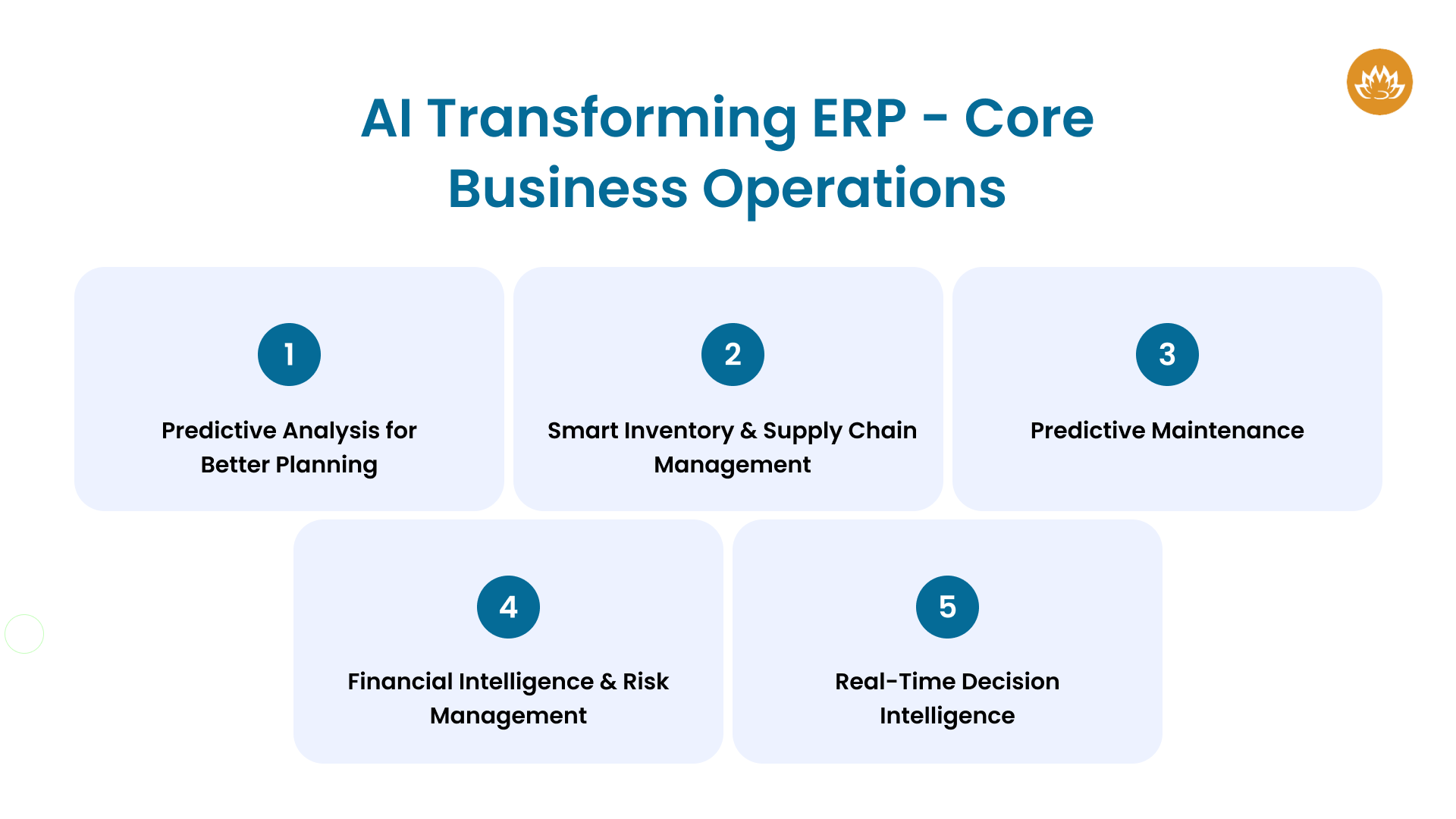
AI Transforming ERP - Core Business Operations
ERP empowers businesses to handle and manage internal operations with efficiency and precision. With AI integration, these ERP systems can become faster, smarter, and highly adaptive. So far, AI has enhanced ERP to a great extent.
Intelligent Process Automation
ERP systems have repetitive processes. It includes data entry, reporting, and invoicing. With AI automation, these processes become easy to handle using technologies like machine learning and robotic process automation.
Core Benefits are:
- Lesser manual effort
- Faster execution
- Fewer errors
Teams can focus more on strategic work and delegate various routine tasks to AI-powered ERP systems.
Predictive Analysis for Better Planning
With AI integration, ERP systems can forecast future trends through historical data. Various applications that are used include demand forecasting, financial planning, and resource allocation. AI has now helped businesses make forward-looking decisions instead of relying on static reports.
Smart Inventory & Supply Chain Management
Inefficiencies in supply chain management can cost a lot. Using AI, each step can be optimized from the very start. Some key transformations in this field through AI are:
- Perfect demand prediction to prevent overstocking or shortage
- Optimizing routes for logistics
- Supplier performance analysis
With AI empowering ERP, you can provide the right products at the right time to your customers without bearing unnecessary costs.
Predictive Maintenance
One of the major concerns for factory units in the manufacturing and industrial sector is downtime. AI can help in analyzing sensor data and usage patterns to predict machine failures. It can even help to schedule maintenance proactively. Overall, you will get reduced downtime and an extended lifespan of your equipment.
Financial Intelligence & Risk Management
AI also helps in strengthening financial modules within ERP systems. AI embedded into ERP provides several core benefits, such as:
- Detects fraud with anomaly detection
- Automates expense categorization
- Forecasting of cash flow
All this will lead to more accurate financial planning and reduced risk exposure.
Real-Time Decision Intelligence
AI-powered ERP dashboards will give real-time insights and will prevent delays in delaying reports. This leads to:
- Quick decision-making
- Rapid response to changes
- Higher operational visibility
AI-powered ERP systems are now providing real-time control and not reactive management.
AI Transforming Business Management Solutions
With AI-powered business management software, AI impacts not just CRM and ERP. It can transform connecting departments, processes, and strategies. What you get is:
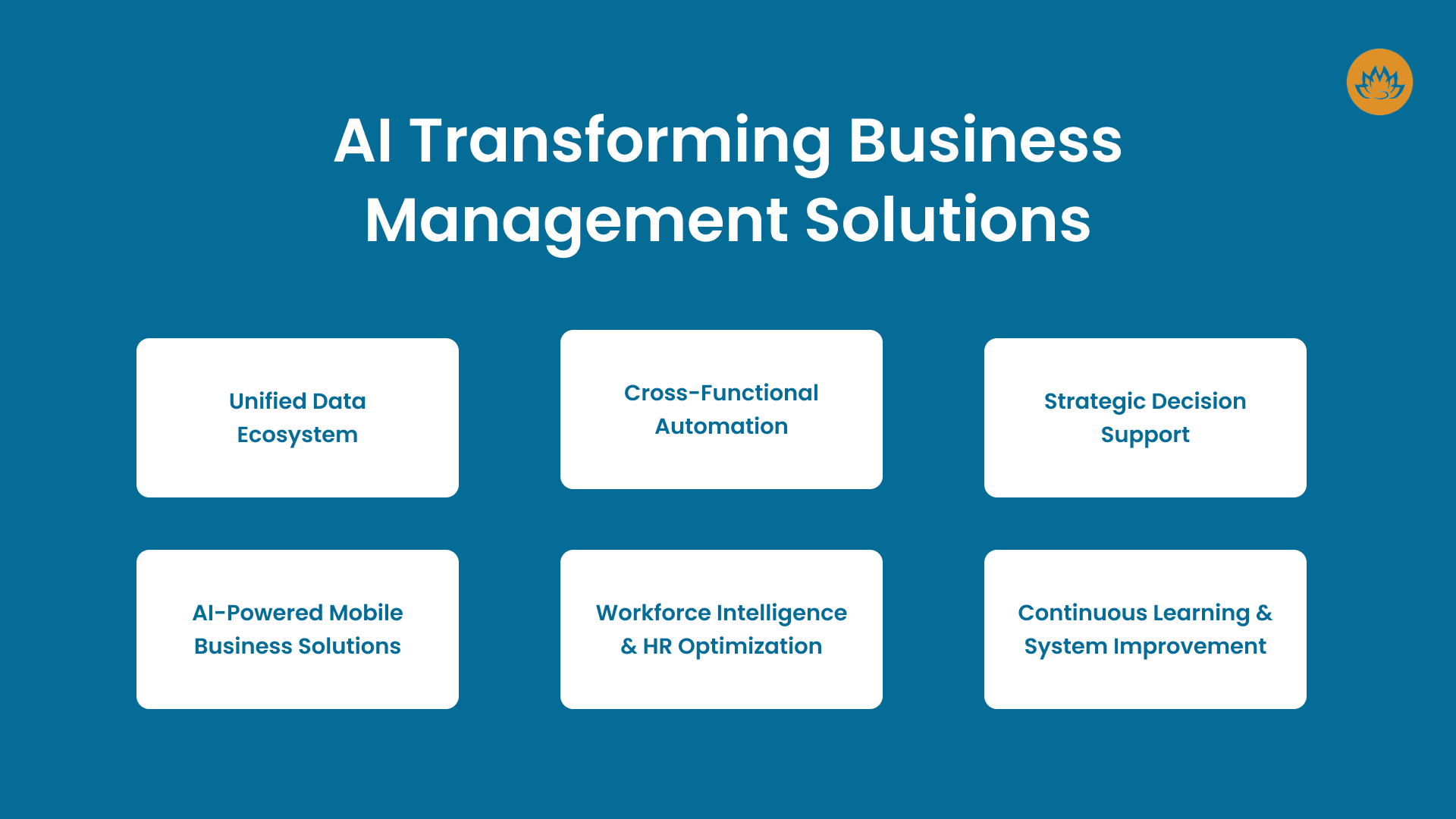
Unified Data Ecosystem
AI integration of data extracted from multiple systems gives a single and unified view. The core benefits that businesses get are:
- Elimination of data silos
- Improvement in data accuracy
- Enhancing collaboration across departments
Cross-Functional Automation
AI also helps in connecting workflows across various departments. Some of the core examples are:
Examples:
- Sales triggering inventory updates
- Inventory changes triggering procurement
- Procurement updating financial records.
Overall, what you get is a seamless operational workflow with bare minimum manual intervention.
Strategic Decision Support
AI provides holistic benefits. It is not just limited to one kind of service. Besides providing accurate data, it also provides recommendations. Now business leaders can:
- Analyze multiple scenarios
- Understand potential outcomes
- Make informed strategic decisions
AI-Powered Mobile Business Solutions
Companies also need AI-powered mobile solutions that can transform modern businesses. They hire AI-powered mobile app development services from reputed mobile app development companies. They hire AI developers to integrate real-time alerts and insights, get voice-enabled assistants, and embed predictive notification services. Companies can manage operations anytime from anywhere.
Workforce Intelligence & HR Optimization
AI enhances human resource management,t giving deeper insights into workforce performance. Some of the top use cases are:
- Employee performance analytics
- Smart hiring through resume screening
- Workforce planning
With this in charge, companies can build more efficient and stronger teams.
Continuous Learning & System Improvement
All the AI systems continuously learn and improve over time. As this remains intact, businesses get assured benefits such as better predictions, more accurate insights, and continuous optimization.
Core Challenges To Be Considered
As AI offers various types of advantages to the world, especially businesses, it is important to consider some of the core challenges that inevitably come along with it.
- Data quality issues
- Initial implementation costs
- Integration complexity
- Change management and adoption
Future of AI in Business Systems
AI continues to evolve, bringing up new trends into the business ecosystem. The upcoming trends that are most likely to enter the mainstream of every business are:
- Autonomous business processes
- Generative AI for reporting and communication
- AI-driven decision ecosystems
Conclusion
AI is playing a crucial role in the fundamental transformation of CRM, ERP, and business management systems. These systems have now become intelligent platforms delivering automated processes, predictive results, and better decisions. Businesses that want to scale with higher efficiency and stay competitive need to integrate AI as early as possible. At Whitelotus Corporation, we help companies transform phenomenally through our tailored AI solutions. We provide intelligent integrations and AI-powered mobile applications that can easily and seamlessly align with your modern business needs. Contact us today to know more about our services.