

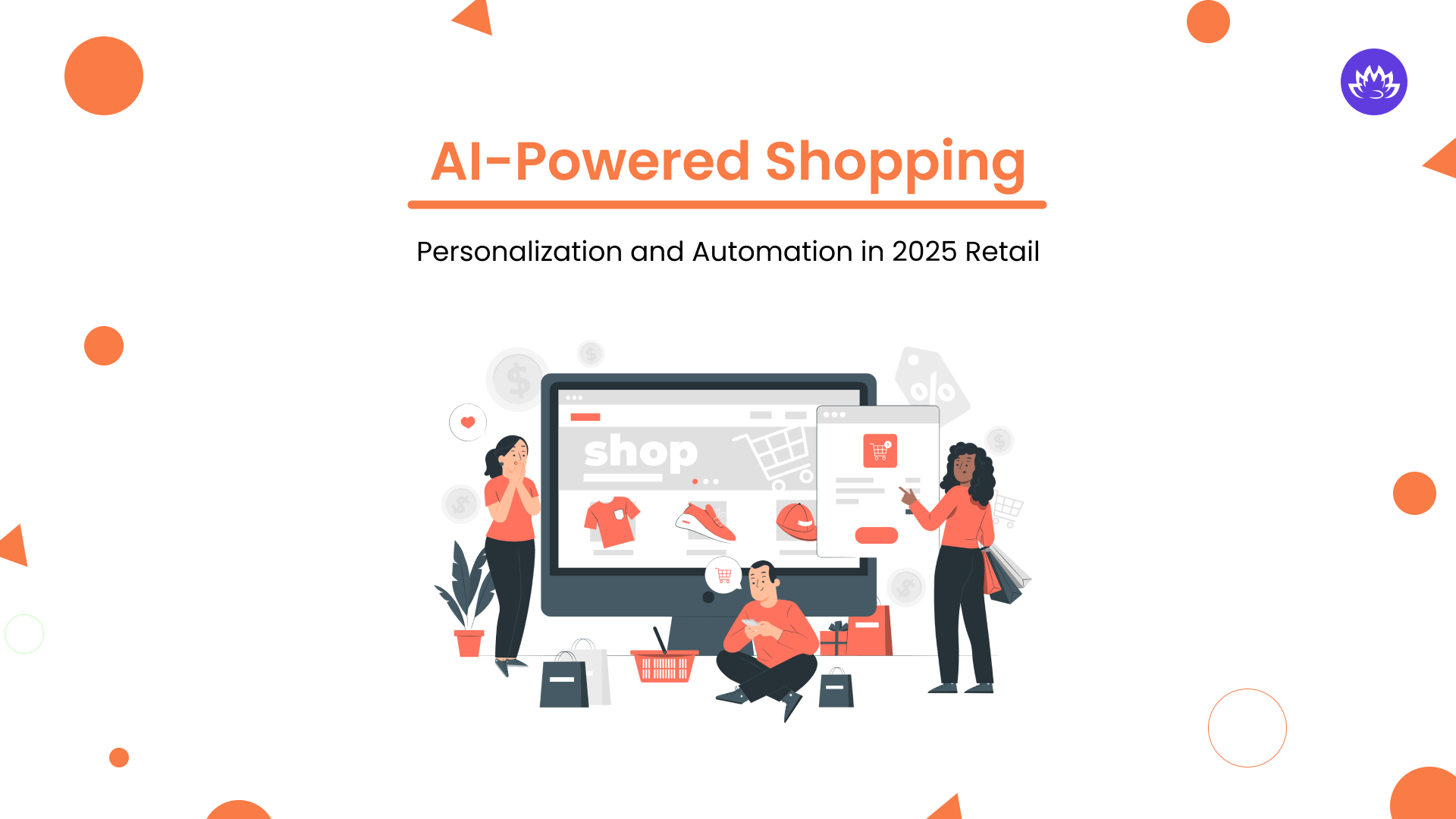
Today’s online shoppers and buyers require rapid, easy, and personalized retail services. However, meeting these demands in real time isn’t always simple, and one of the hardest things for shops to do is provide personalized experiences.
This is where artificial intelligence (AI) in retail enters the picture to help e-commerce deal with these issues directly. Every step of the retail value chain may benefit from artificial intelligence (AI), from improved customer insights and personalized suggestions to more intelligent inventory and logistics.
As a trusted software development company, we have 14 years of experience in providing AI in mobile app development services. Especially for retail, we are here to give you a closer look at how AI-powered shopping has a deep impact on the way digital sales operate. So let us explore some use cases of AI in retail solutions, along with the top benefits, followed by real-life examples.
What is AI in Retail?
AI in retail refers to the application of AI modules to improve customer interactions, streamline corporate processes, and encourage data-driven decision-making. Large volumes of data can be processed and analyzed using AI in web development to automate procedures and produce more precise, context-aware results.
AI is being used by companies in both online and offline retail settings for tasks including customer support, product recommendations, inventory control, and pricing. Additional capabilities, such as dynamic content creation and real-time engagement using natural language, have been introduced by the growth of generative AI in industries like marketing and education.
With a retail AI solutions market valued at $11.6 billion in 2024 and projected to expand at a sustainable compound annual growth rate (CAGR) of 23% by 2030, the potential business impact is substantial.
Main Benefits of AI in Retail
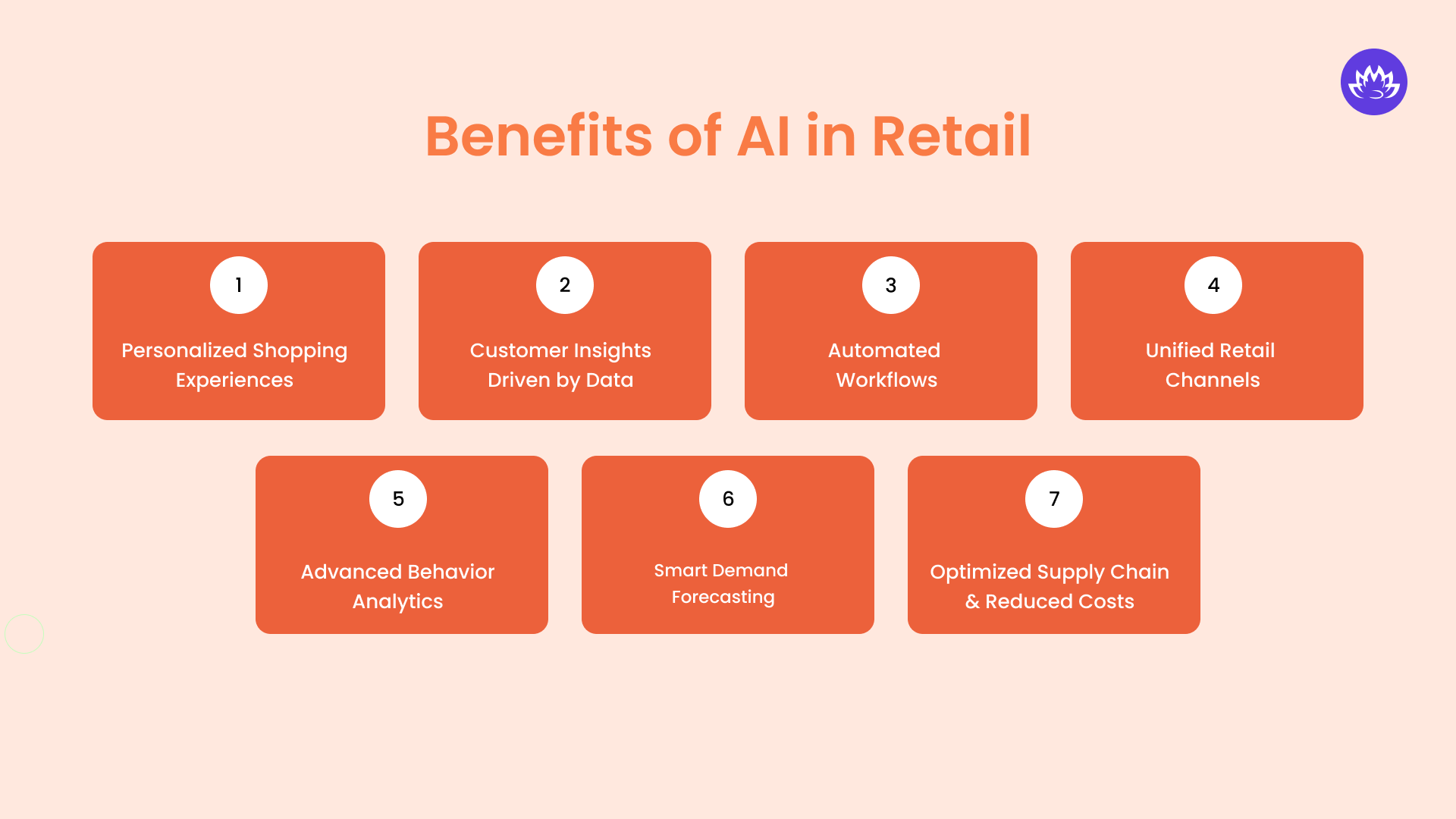
Retail now experiences a deep transition with AI technologies become increasingly ingrained in daily operations and client touchpoints. Rather than being a future trend, AI has become important in tackling existing industrial difficulties.
It has an impact on how retailers handle inventory, analyze customer behavior, and improve their outreach. Numerous observable economic benefits can be seen when artificial intelligence retail solutions become more widely used.
Personalized Shopping Experiences
Consumers are not satisfied with generic offers. By using AI to analyze each customer’s behavior, preferences, and past purchases, you can provide personalized product recommendations, deals, and experiences. Long-term loyalty and engagement are strengthened by this degree of customisation.
Customer Insights Driven by Data
AI looks past superficial statistics to find significant trends in consumer behavior. These insights, which range from purchase trends to product preferences, provide merchants with a deeper understanding of what influences conversions and where to focus their efforts. You consequently come up with better customer strategies and make better informed decisions.
Automated Workflows
Manual procedures increase errors and reduce productivity. Automated AI retail solutions reduce the need for human input and improve speed and accuracy by streamlining everything from warehouse visibility to inventory tracking. In addition to saving time, it makes it possible to scale processes without adding complexity.
Unified Retail Channels
Consumers effortlessly switch between online and offline channels. When data is linked and interactions happen across touchpoints, AI assists merchants in maintaining a consistent customer experience. AI ensures a seamless and personalized experience, whether a customer shops in-store or browses online.
Advanced Behavior Analytics
Knowing what your clients view, leave, or return to can help you identify essential opportunities. When AI is used in conjunction with predictive analytics models, it can recognize these behavioral cues and assist businesses in taking immediate action, such as retargeting with pertinent offers or optimizing site design for increased user engagement.
Smart Demand Forecasting
Rather than relying solely on intuition, stock level management should always be a strategy. Retail AI systems accurately predict demand by utilizing sales trends, seasonal patterns, and even outside variables like the weather. Ensuring that inventory levels correspond to actual customer needs helps to reduce the risk of overstocking or stockouts.
Optimized Supply Chain & Reduced Costs
AI improves supply chain visibility and responsiveness. Retailers may cut down on excess inventory, prevent expensive delays, and more effectively manage resources by examining logistical data, demand trends, and supplier performance. In the end, AI in retail reduces operating costs without sacrificing flexibility.
AI Use Cases in Retail for 2025
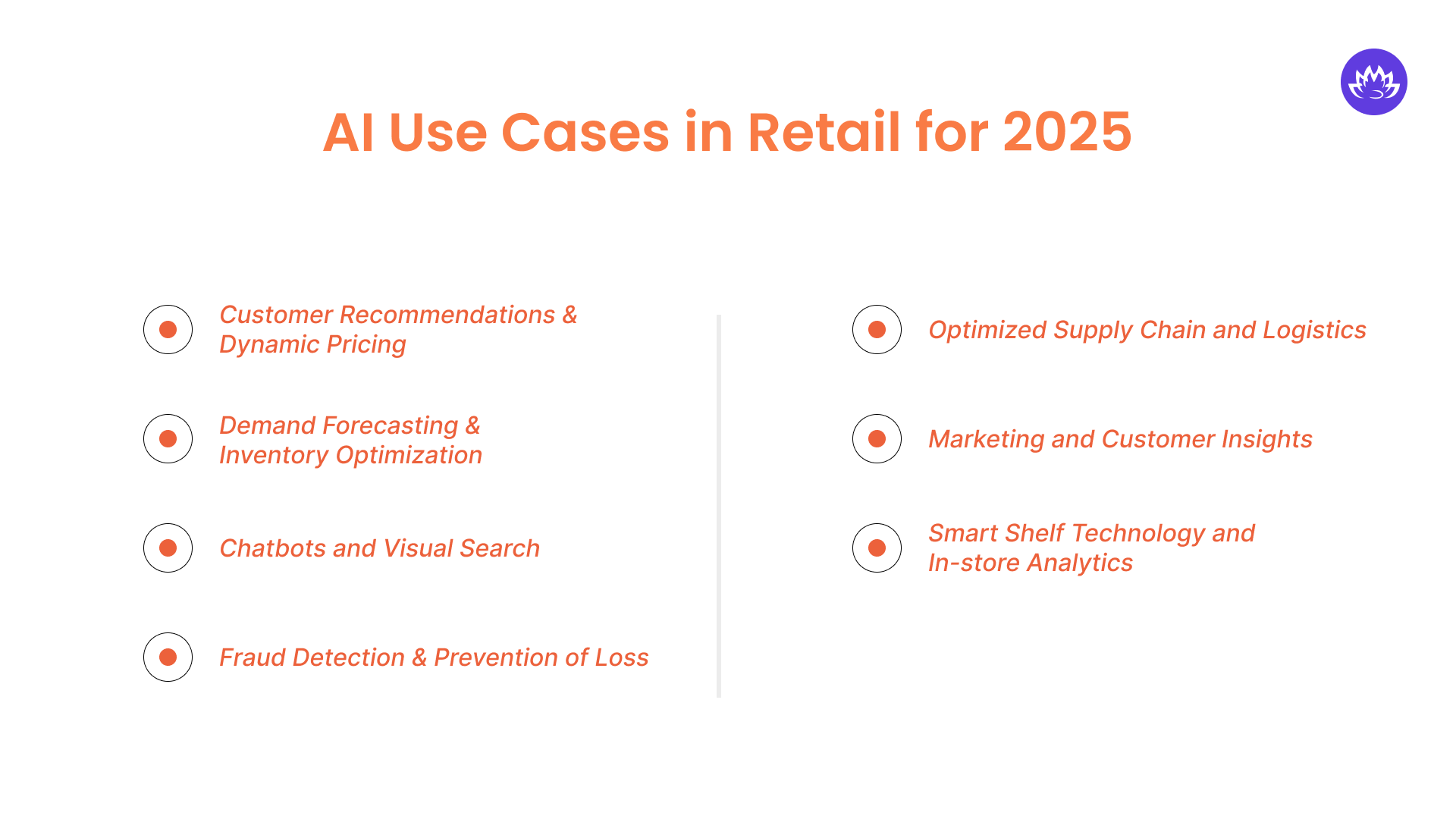
AI is used by e-commerce companies for a variety of purposes, including as conversational tools and demand forecasts. In fact, more than 20% of respondents employ nearly half of the 30 use cases that were studied, demonstrating AI’s expanding influence across retail functions.
GenAI is used in many of the most well-known applications, especially in fields like customer experience and personalization. Let’s examine the most widely used AI applications in retail operations that we have selected.
Customer Recommendations & Dynamic Pricing
AI algorithms analyze client data, including past purchases, current behavior, and contextual cues, to provide hyper-targeted product recommendations. Dynamic pricing engines simultaneously modify prices in response to changes in consumer profiles, competitive activity, and demand.
To increase customer engagement and optimize revenue per visit, retailers such as Amazon and Netflix have incorporated these features.
Demand Forecasting & Inventory Optimization
Through the processing of both structured and unstructured data, including sales history, seasonality, and market trends, machine learning models are able to produce more accurate demand forecasts. Especially in industries with high turnover rates, such as food and fashion, this accuracy enables retailers to adjust stock levels, reduce waste, and prevent stockouts.
The German supermarket chain REWE reduces food waste and improves product availability by automating demand forecasts for perishable commodities using artificial intelligence.
Chatbots and Visual Search
Advanced chatbots and virtual agents that assist consumers through digital channels by offering real-time support, tailored recommendations, and order resolution are powered by natural language processing, or NLP. In visually driven categories like clothing and home décor, AI applications in retail, such as visual search tools, improve product discovery by enabling customers to input photographs and receive product matches.
AI-powered digital assistants and augmented reality-based virtual try-on capabilities have proven successful for Sephora and H&M. If you have a product that needs AI integration for hyper-personalization and automation, you can approach a reputable mobile app development company.
Fraud Detection & Prevention of Loss
AI improves transactional security by spotting fraud-related tendencies. Anomaly detection allows systems to instantly identify and stop questionable activities. AI retail solutions are used in in-store analytics to assist in reducing shrinkage and operational losses.
These technologies are being used by eBay and major grocery stores to lower risk exposure and strengthen trust.
Optimized Supply Chain and Logistics
AI can perform intelligent route planning, automatic demand-supply alignment, and real-time adjustments that depend on weather or traffic restrictions. With this it can use various technologies to support logistics operations. These features lower operating costs and increase delivery accuracy.
For example, Walmart uses AI to improve route efficiency and forecast delivery delays by utilizing external data sources.
Marketing and Customer Insights
To create highly relevant advertising, AI-driven segmentation models analyze demographic, transactional, and behavioral data. Retailers may reduce acquisition costs and increase engagement and marketing ROI by automating audience targeting and content tailoring.
One of the best applications of AI in retail is demonstrated by Levi Strauss. To minimize markdowns and surplus inventory, the company has implemented predictive analytics to optimize inventory across its storefronts and e-commerce platforms.
Smart Shelf Technology and In-store Analytics
AI-enabled sensors and computer vision systems track foot traffic, dwell duration, and product availability in real-world retail settings. 73% of consumers say they rely on physical retailers for their purchases, while nearly two-thirds of consumers shop in physical stores.
These insights facilitate adaptive store layouts, expedite replenishment, and influence merchandising decisions. To preserve inventory accuracy and enhance in-store responsiveness, smart shelf technologies are being increasingly tested.
How Does AI in Retail Resolve Common Industry Challenges
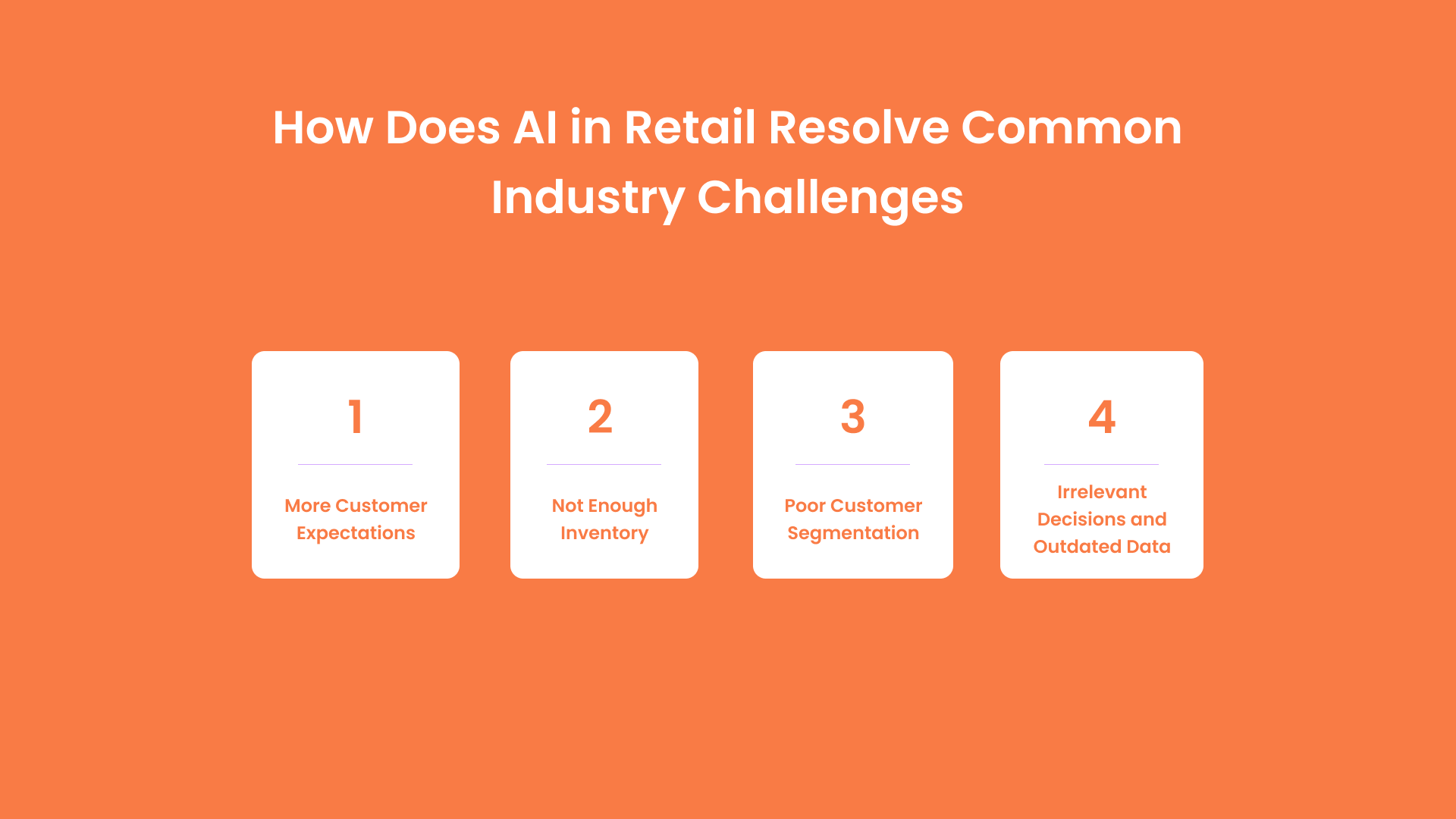
Today’s retailers must make quick judgments, manage limited labor resources, and produce marketing that genuinely resonates, in addition to maintaining perfectly stocked shelves. AI changes everything by improving customer targeting, optimizing inventory, accelerating insights, and streamlining processes. Here’s a closer look at how AI overcomes these particular obstacles to increase productivity and produce better outcomes. To be precise, we have presented the problem and the solution. Companies hire dedicated developers to revamp their retail businesses using AI-driven solutions.
More Customer Expectations
Customers need well-aligned, tech-driven shopping experiences at all platforms. A study done by IBM found nearly half of users showed interest in using virtual assistants, AR/VR technologies, and AI tools for shopping purposes. Also, those who were entirely new to AI were open to adapt this change and exploring. So, adopting AI in retail is always a win-win situation. With AI-driven personalization and automation, you can fulfill all those modern needs of your customers.
Not Enough Inventory
AI helps merchants in predicting demands, which improves inventory management accuracy. To maintain balanced stock levels, reduce surplus inventory, and prevent empty shelves, it considers historical sales, seasonal trends, and local market conditions. This leads to better efficiency and profitability and products are available when and where customers need them.
Poor Customer Segmentation
AI transforms marketing through analyzing consumer behavior, tastes, and purchasing patterns. AI aids in the creation of targeted advertisements that improve consumer engagement rather than making educated guesses based on general categories. Better returns on marketing investment, increased sales, and increased engagement are the outcomes.
Irrelevant Decisions and Outdated Data
AI also expedites decision-making by providing real-time data across the company, including sales trends and supply chain status. Retailers can stay competitive and respond quickly to shifting market conditions thanks to this instant access to new data.
Why Choose Whitelotus Corporation?
We help retail businesses overcome fragmentation to deliver smooth and consistent consumer experiences, thanks to our extensive experience in developing scalable, data-driven solutions.
The committed teams at Whitelotus Corporation concentrate on developing reliable cloud-based solutions that incorporate automated workflows, real-time data, and cutting-edge AI insights. Flexibility, scalability, and security are the main aspects while offering our AI retail solutions. It can be for your software modernization or unique solutions built from the ground up, we are here to help you grow your retail business.
Final Thoughts
There are more advantages to AI than just financial ones. Better decision-making has been the biggest benefit, according to 57% of executives, and it has also increased business efficiency and enhanced consumer experiences.
Because consumers can effortlessly transition between online and in-store shopping, a robust omnichannel strategy is essential. AI’s abilities to manage comprehensive datasets will present hyper-personalized recommendations and more cross-selling. Advanced functionalities backed by AI integration in the retail business are the future of the retail space. Partner with Whitelotus Corporation – the most trusted mobile app development company in India to transform your retail business. Contact us, and our retail software development experts are here to assist you.
Author

Kirtan is CEO of Whitelotus Corporation, an emerging tech agency aimed to empower startups and enterprises around the world by its digital software solutions such as mobile and web applications. As a CEO, he plays key role in business development by bringing innovation through latest technical service offering, creating various strategic partnerships, and help build company's global reputation by delivering excellence to customers.
View all posts