

AI

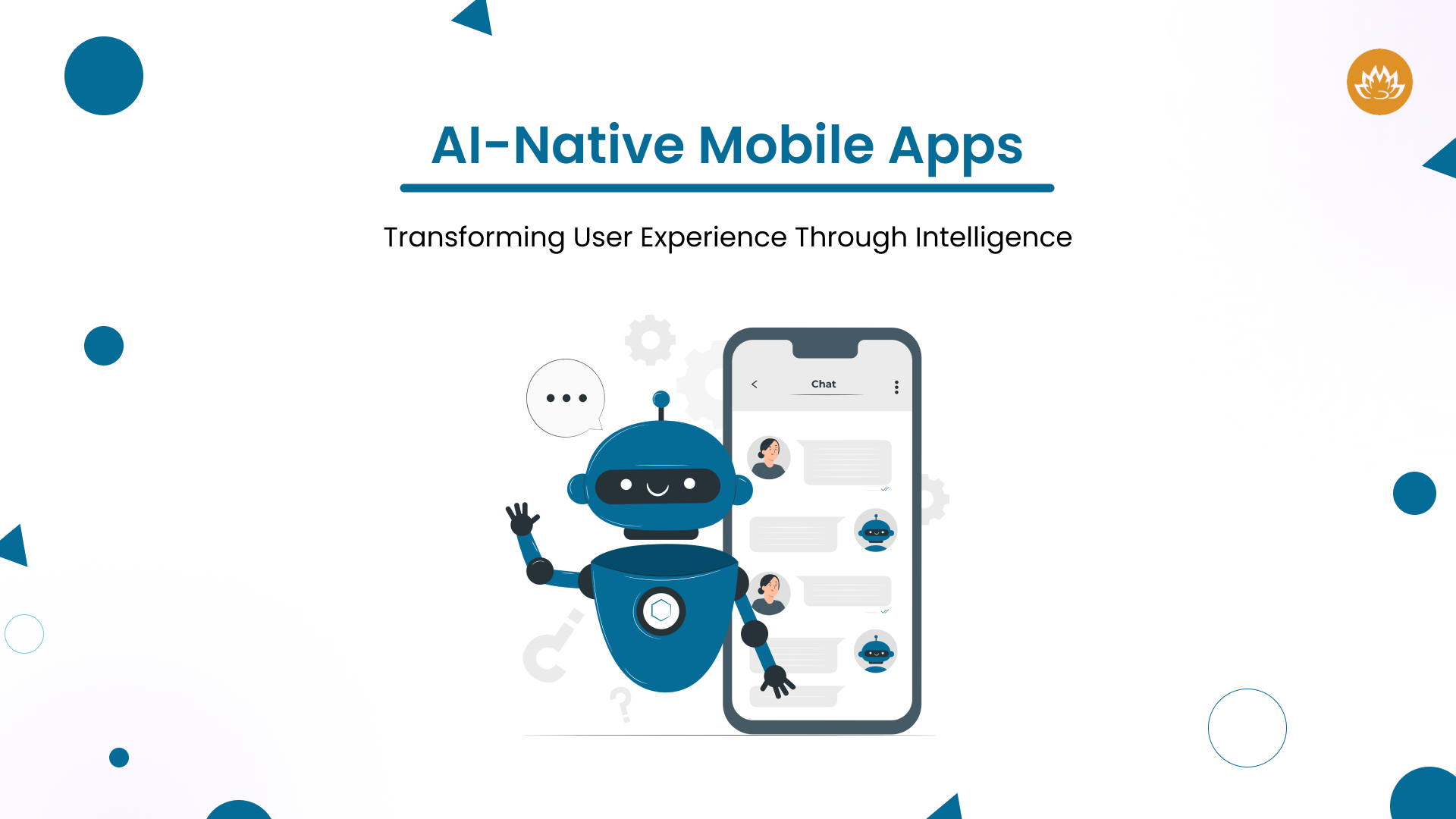
AI-Native Mobile Apps: Transforming User Experience Through Intelligence

AI-Native Mobile Apps
AI-powered native mobile applications are seen improving and occasionally even changing our interactions with them at an extraordinary feat. Today, all the personalized experiences, faster performance, and more interactive elements are made possible by artificial intelligence (AI). It is no longer a supporting tool for developing mobile applications. It is instead becoming an integral component. The new approach is not about integrating AI into mobile apps; instead, it’s about starting from scratch.
Artificial intelligence (AI) is becoming a crucial part of developing mobile apps rather than an afterthought as mobile technology advances. AI-native mobile apps provide a smooth, intelligent, and optimized user experience since AI capabilities are integrated into their core design.
In this blog, we will take you through some of the significant ways in which AI-Native apps have transformed user experiences. Also, AI in mobile app development is taking a huge leap. We will understand the core characteristics of AI-native mobile apps, some common AI models used in mobile apps, and, finally, the best AI-native use cases across various industries. So let us begin. 

What does an AI-native mobile app mean?

In case of mobile applications, an AI-native app is created with AI at its core from the beginning. AI-native apps are designed to fully integrate machine learning and AI models as essential components. This will be in contrast to traditional apps that can integrate AI features as upgrades or add-ons (commonly referred to as AI-enabled apps). Rather than being added on top of pre-existing features, the AI algorithms, data processing pipelines, and decision-making procedures are integrated directly into the app’s architecture.

Benefits of AI-Native Integration

Benefits of AI-Native Integration

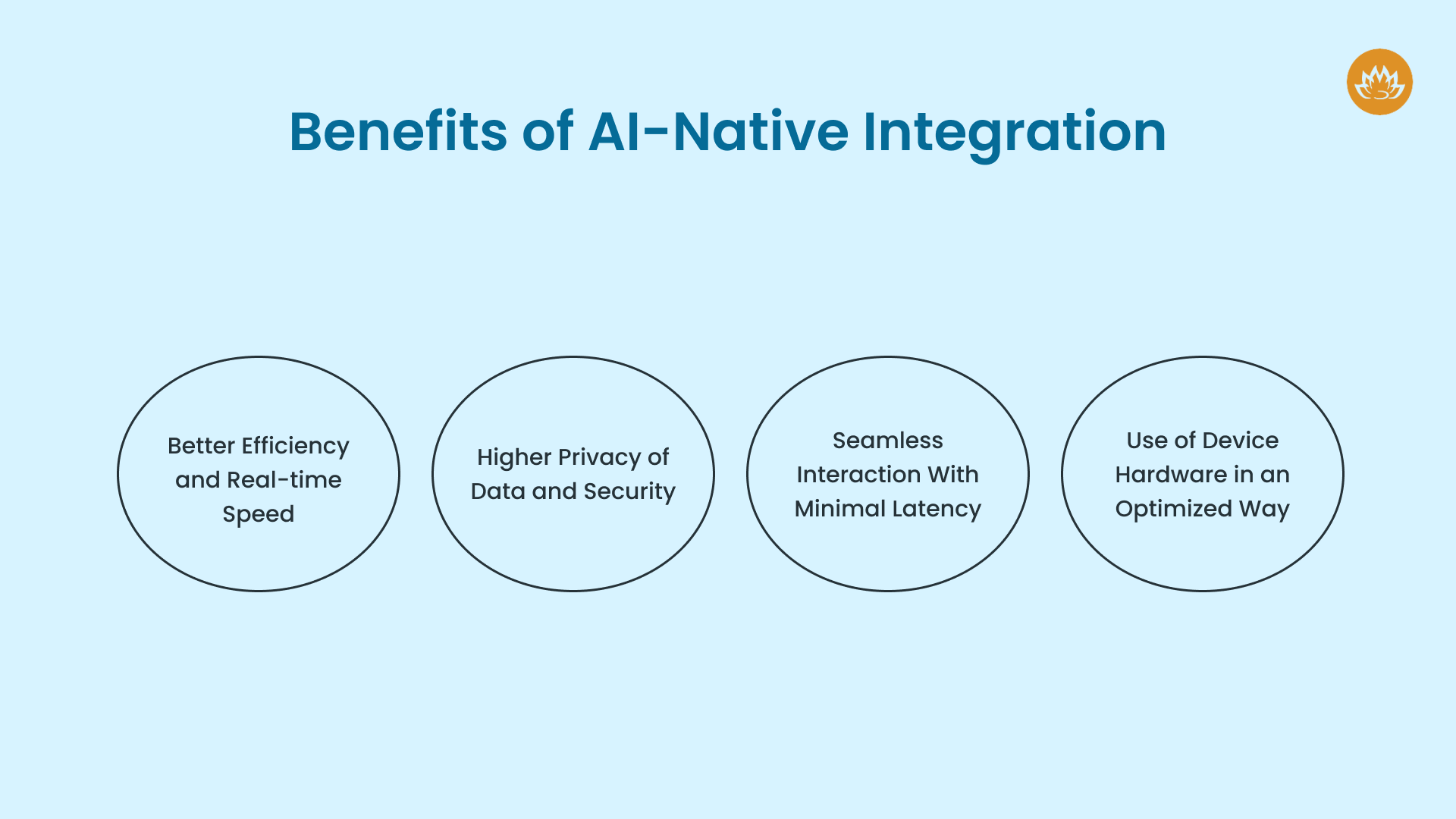
Better Efficiency and Real-time Speed

AI-native apps remove the need to transfer data back and forth to the cloud by processing data locally on the device. This eliminates the need for users to wait for server responses and gives them instant results. AI-powered photo editors, voice assistants, and smart keyboards all do operations in real-time, making the user experience considerably faster and more seamless. This results in improved app engagement and user happiness for businesses.

Higher Privacy of Data and Security

Sensitive or private information remains on the device and is not sent to external servers when AI tasks are managed locally. This aspect will substantially reduce data breaches or leaks, which is crucial in sectors like banking, healthcare, and education. Because AI-native integration provides a more private and secure solution, users are becoming more aware of how their data is handled.

Seamless Interaction With Minimal Latency

AI-native apps provide ultra-low latency by removing the delay brought on by server response times and internet connectivity. This is particularly important in essential use cases where even a split-second lag might affect findings or user safety, such as medical diagnostics, augmented reality (AR), or real-time language translation. In demanding environments, the decreased latency guarantees more responsive, fluid, and dependable performance.

Use of Device Hardware in an Optimized Way

Neural processing units (NPUs) and potent AI accelerators are built into contemporary smartphones and devices to tackle challenging machine learning tasks. AI-native applications fully utilize these features. It helps them to execute sophisticated algorithms and deep learning models without taxing device resources or wasting battery life. The end result is intelligent, energy-efficient, high-performance applications.

Characteristics of AI-Native Mobile Apps
Characteristics of AI-Native Mobile Apps
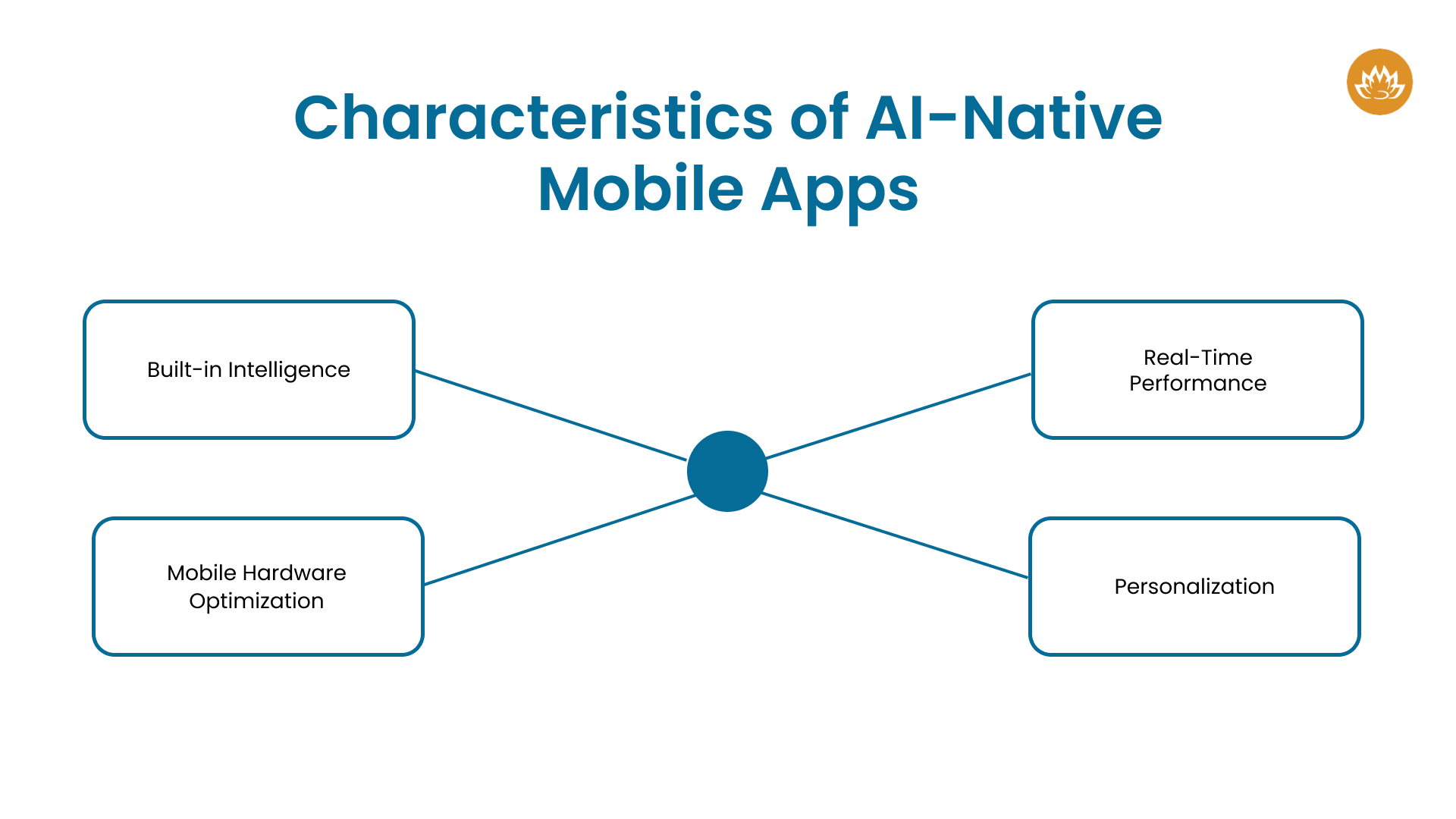
All kinds of AI-Native mobile apps have many different traits that are well-defined and unique.

Built-in Intelligence

AI is integrated into the app’s architecture and is not added as an afterthought. It also ensures that adaptive responses, personalization, and decision-making are handled easily.

Mobile Hardware Optimization

These applications are designed to fully utilize mobile-specific hardware, such as Qualcomm’s AI Engine or Apple’s Neural Engine. This improves user privacy and lowers latency by enabling on-device processing.

Real-Time Performance

Even for tasks requiring sophisticated computations, such as picture recognition or natural language processing, customers encounter minimal lag because the AI algorithms operate locally on the device.

Personalization

Real-time behavior adaptation by AI-native apps allows them to provide individualized experiences. It can further change according to each user’s choices and usage habits.

Common AI Models in Mobile Apps

Although implementation specifics are not the focus of this article, it is still important to highlight some of the well-known AI models that underpin AI-native mobile apps. Being an AI mobile app development company, we have been exploring these models for several projects.
  • Convolutional neural networks, or CNNs, are primarily employed for tasks involving the recognition of images and videos. Many augmented reality (AR) filters and medical imaging applications rely on convolutional neural networks (CNNs).
  • Text and time-series data are examples of sequential data that are frequently processed by recurrent neural networks (RNNs). They power speech recognition and natural language processing (NLP) functionalities in mobile apps.
  • Transformers, which were first made popular in the field of natural language processing, have shown promise in a variety of applications, from sentiment analysis to language translation. They are helpful in chatbots and virtual assistants because of their capacity to manage context over lengthy sequences.
  • Lightweight models: Models such as SqueezeNet and MobileNet are specifically designed for embedded and mobile devices. They are ideal for real-time applications on smartphones, as they strike a good balance between precision and processing efficiency.

Top AI-Native Use Cases Across Industries
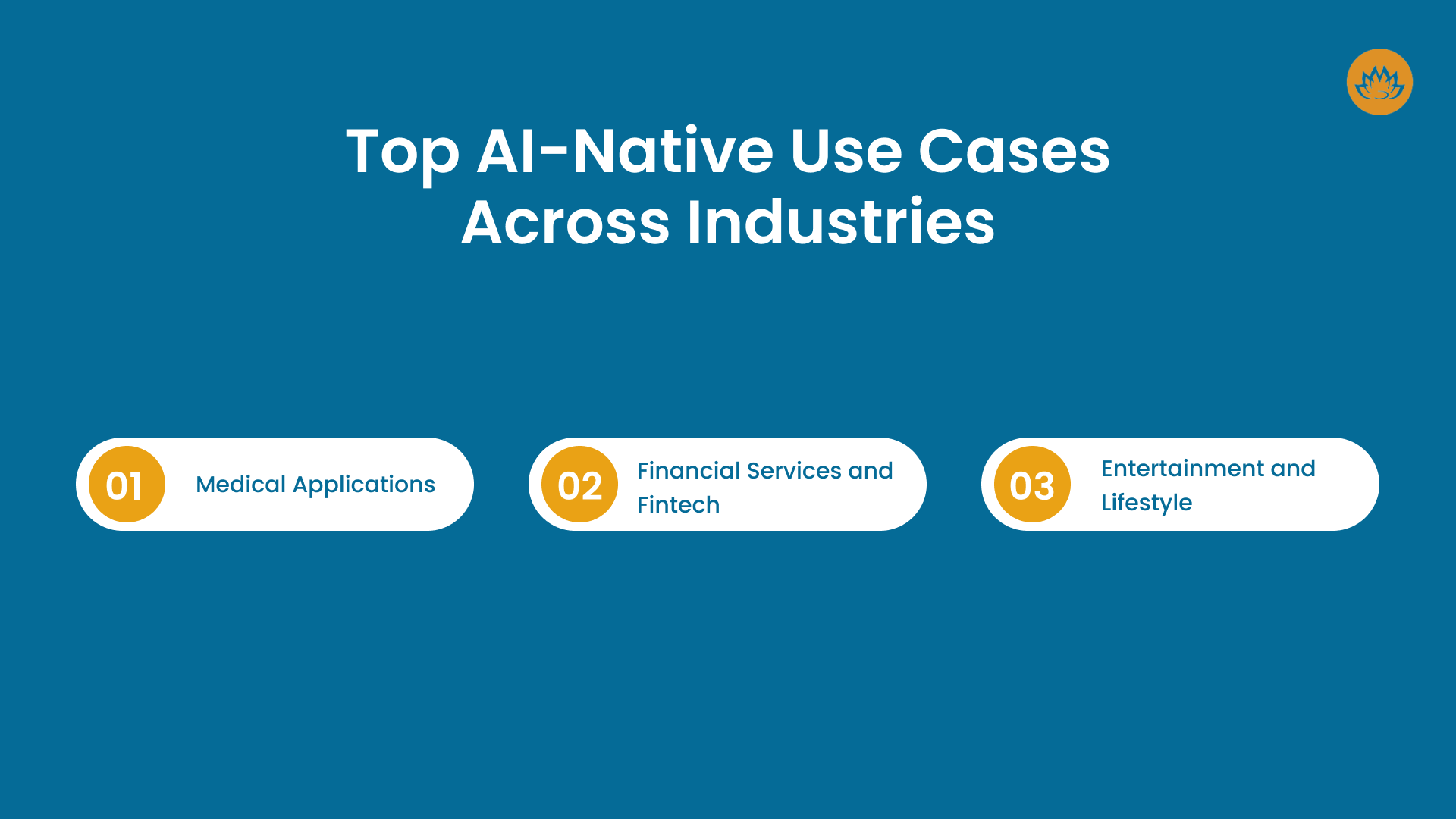
Top AI-Native Use Cases Across Industries
Because AI-native mobile apps put advanced AI capabilities right in the user’s pocket, they are causing a stir in a variety of industries. Let’s look at a few crucial areas:

Medical Applications

One of the most potential industries for AI-native mobile apps is healthcare. Examine the following instances:
Diagnostic support: There are apps that can analyze photos of skin lesions using deep learning models to help users determine whether a particular area is at risk for skin cancer. CNNs are frequently used by these apps to find trends and abnormalities in skin imaging data.
Remote monitoring: The use of AI-native applications for remote patient monitoring is growing. Apps connected to wearable technology, for instance, can monitor vital signs in real-time and use predictive analytics to notify physicians and patients of any potential health issues.
Personalized health advice: Using data analytics and user-specific health information, certain apps use AI to provide tailored suggestions for medication reminders, diet, or exercise.
AI integration into these apps builds more accuracy, gives real-time feedback, and can also operate offline. You can hire dedicated developers from a reputed AI development company for AI integration into your existing mobile app. More advanced diagnostic technologies and ongoing monitoring may be utilized in future applications to detect diseases at an early stage.

Financial Services and Fintech

Another sector where AI-native mobile apps are revolutionizing the market is finance:
Fraud detection: Real-time transaction data processing by AI-native banking and financial services apps can identify questionable activities. These apps will help lower the risk of fraudulent transactions without sacrificing speed and will use sophisticated machine learning algorithms.
Personalized financial management: Based on user behavior and spending habits, several financial applications currently include credit monitoring, budgeting assistance, and customized investment recommendations. Sensitive financial data can be securely processed by on-device AI, protecting its privacy.
Risk assessment: AI algorithms can evaluate market patterns and historical data to produce risk ratings for many financial products. As a result, consumers are better equipped to decide on loans and investments.

Entertainment and Lifestyle

AI-native mobile apps have also sparked a significant transformation in the entertainment industry. Many aspects have influenced the way we now experience entertainment on the screens.

Augmented Reality (AR): AI is utilized by mobile apps that use AR, such as Instagram and Snapchat, to superimpose digital effects onto live photos in real-time. Models that process visual information and perform transformations nearly instantly enable this.

Real-time image and video processing: AI-powered capabilities that automatically change the background, add filters, and adjust lighting are increasingly common in many camera apps. CNNs and lightweight models, which are tuned for mobile performance, are key components of these functionalities.

Chatbots and voice assistants: As natural language processing (NLP) advances, mobile voice assistants are getting more complex. Without transferring voice data to the cloud, AI-native mobile apps can process and comprehend spoken language on the device to provide individualized support.

Future of AI-Native Mobile Applications

The potential applications of AI-native mobile apps in the future can be in smart homes, other industries like retail and hotels, and deeper into the healthcare sector. Mobile apps that use AI to monitor and operate smart home devices will provide better automation and energy management as these devices scale. With the help of sophisticated AI models that interact with the real world in real-time, future mobile apps may offer even more immersive augmented reality experiences.
Consider an application that, without jeopardizing patient privacy, continuously learns from various data sets across several devices. Federated learning can keep sensitive data local. It allows AI models to get better over time. Mobile apps may soon be able to analyze the context, such as a user’s location or current behavior, thanks to advancements in artificial intelligence, providing more proactive and personalized support.

Conclusion

Mobile apps that are AI-native are raising the bar for user interaction and customization. We can create intelligent, responsive, and user-focused apps by integrating AI into React Native applications, leveraging user behavior patterns. In this AI-driven era, Whitelotus Corporation specializes in combining AI technologies with React Native to provide next-generation mobile solutions that meet clients’ changing needs. We are a team of top AI development experts who work on projects with a dedicated team for each project. Do you have an AI project to discuss? Contact us today or write to us at our official email.

Author

  • Sunil Chavda

    Sunil is a result-orientated Chief Technology Officer with over a decade of deep technical experience delivering solutions to startups, entrepreneurs, and enterprises across the globe. Have led large-scale projects in mobile and web applications using technologies such as React Native, Flutter, Laravel, MEAN and MERN stack development.

    View all posts

Don't skip sharing this post!

Inquiry now

    MAKING IT EXTRAORDINARY