

AI

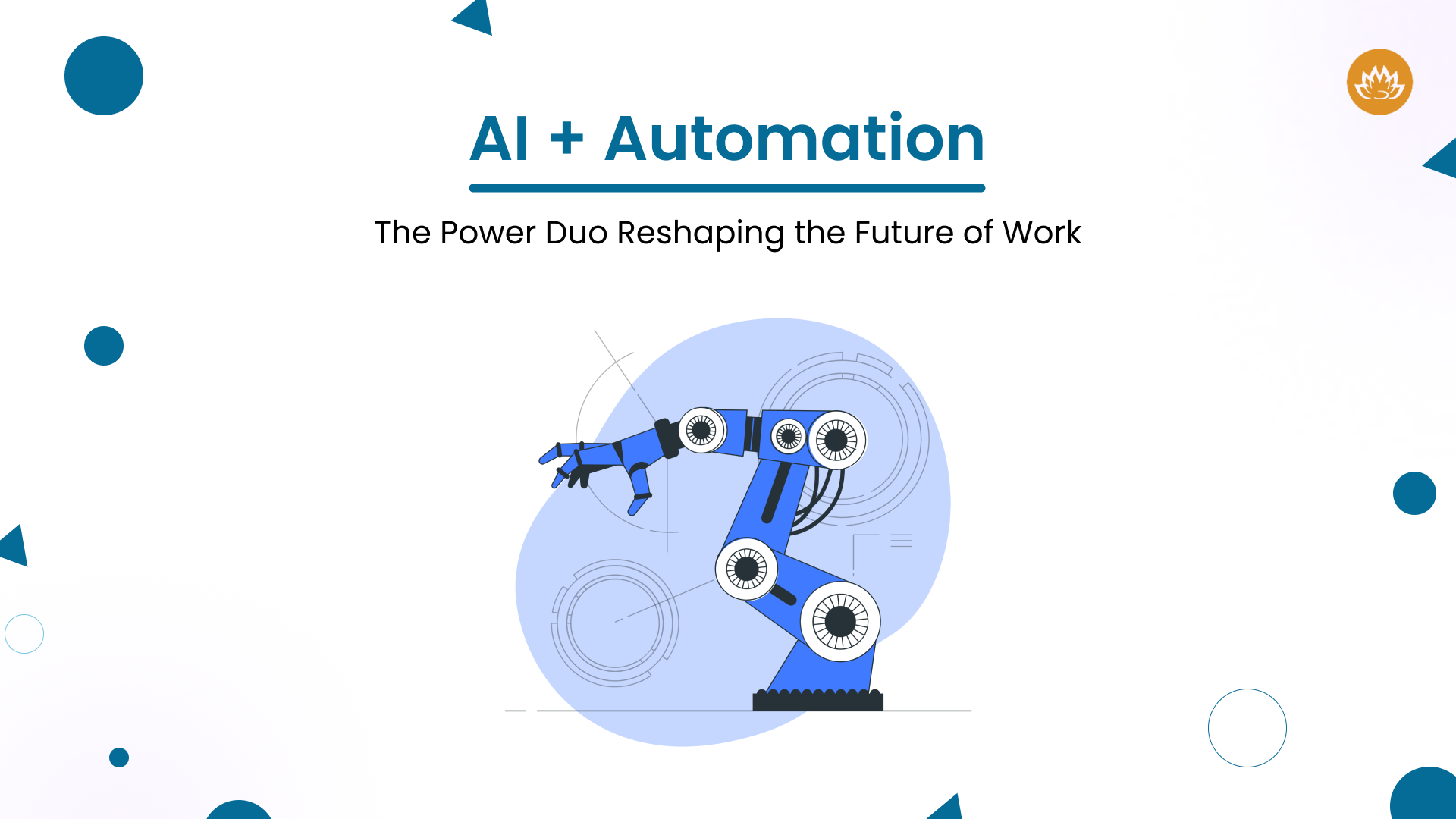
AI + Automation: The Power Duo Reshaping the Future of Work

AI + Automation
Businesses in every industry are seeing a significant shift in how they operate as automation and artificial intelligence (AI) continue to grow at an accelerated rate. Efficiency is only one benefit of integrating these technologies; other benefits include redefining the skills needed in the future workforce, altering entire industries, and opening up new opportunities.
Especially, AI in mobile app development has become the most significant technology trend. Every business, from startups to tech-enabled giants, needs AI in their business operations. The blog discusses automation in the workplace and in which manner it creates a revolution when combined with AI, Generative AI, and orchestration. Whitelotus Corporation is leading this change by assisting companies in implementing intelligent automation to improve productivity, simplify procedures, and open up new avenues. Companies are taking the work to the next level and are making scalable business processes. So let us find out how both together are reshaping the future of work in the current times.

Understanding The Power of AI and Automation

How Does AI Influence Businesses?

Although there are many different kinds of AI systems, in general, AI is able to examine enormous volumes of unstructured data and extract important details that can aid in decision-making and problem-solving. For instance, it can extract information on consumer interactions to assist marketers in identifying the best-selling and least-selling products.

How Does Automation Relate To AI?

Combining those two results in AI automation, which streamlines processes by automating repetitive tasks and enhancing human labor through enterprise agents, also known as digital workers.
Using the customer data from the first example, the AI-powered enterprise agent can provide the customer personalized recommendations, increasing sales by providing them with more relevant options for purchases.

How Will AI and Automation Change The Future of Work?

Businesses wish to scale and increase their use of AI and generative AI for automation. The ideal application of AI technology is symbiotic, not to replace human labor.
Human-centered AI, or AI-human cooperation, is the process by which enterprise agents and people collaborate to complete tasks. Employees receive data from AI, make decisions, and verify the results. It’s about developing ethical, inclusive, and accountable AI systems and ensuring that AI is available to everyone, regardless of tech experience. This is evident in:
  • Simple user interfaces
  • Drag-and-drop, no-code development capabilities
  • Natural language prompt interfaces
  • Inclusive design for different people with different capabilities

Why The Combination Matters?

Intelligent automation, a potent technique that allows systems to not only carry out tasks but also learn, adapt, and optimize themselves over time, is the outcome of integrating AI into automation workflows. This combination gives businesses the ability to:
  • Reduce operational costs
  • Make speed and accuracy better
  • Give time to human talent for higher-value work
  • Provide better customer experiences.
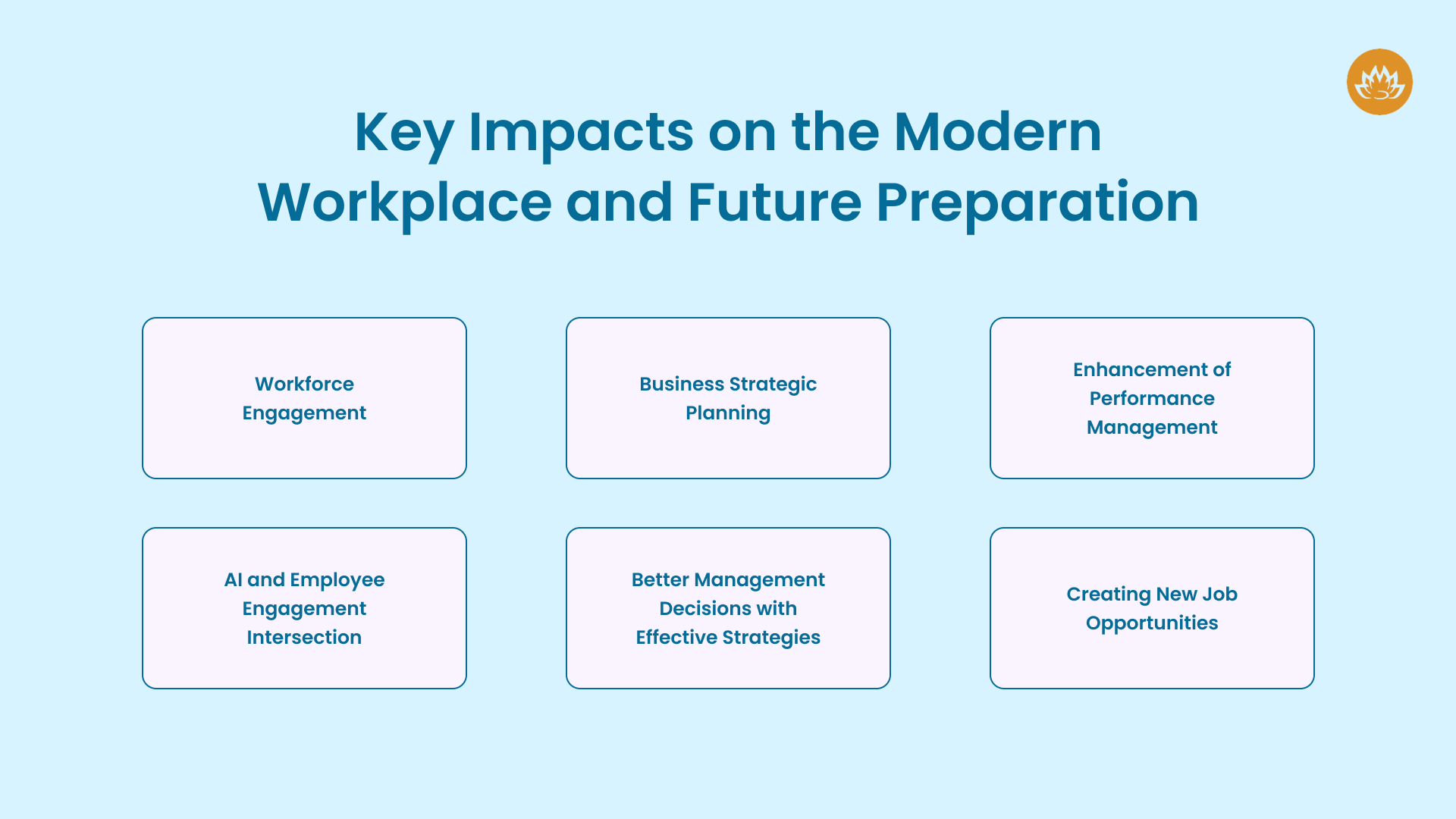
Here are different ways in which AI and automation are together reshaping the future of work

Key Impacts on the Modern Workplace and Future Preparation
Key Impacts on the Modern Workplace and Future Preparation

Workforce Engagement

An essential component of corporate success is workforce engagement. Organizations are using AI technology in this digital transformation era to develop a more motivated and engaged workforce. To get such phenomenal change, companies are creating innovative mobile apps for their target audience by partnering with a mobile app development company. Artificial intelligence-powered automation systems can handle repetitive tasks, freeing staff members to concentrate on higher-level work. What you need here is imagination and strategic planning. This change increases productivity and ensures that employees are motivated and on board with the objectives of the business.
Associations can enhance performance management systems by better understanding employee needs, preferences, and performance patterns using AI-driven insights. AI enables human resources staff to concentrate on strategic planning and create individualized employee development programs by automating repetitive administrative duties, which increases employee happiness and engagement.  

Business Strategic Planning

Artificial intelligence (AI) is changing the game in strategic planning. AI is capable of analyzing vast volumes of data, identifying patterns, and offering predicted insights. It will then assist companies in making better decisions. Businesses can obtain more advantage by using AI technology to optimize resource allocation and adjust their strategy in real time.
AI algorithms, for example, may predict future market trends, assess anticipated risks, and assist companies in anticipating shifts in customer behavior. These factors contribute to more efficient strategic planning. This flexible planning method improves decision-making, matches employee skills with company goals, and maintains high employee engagement. 

Enhancement of Performance Management

Performance management is changing from a yearly evaluation to a continuous process driven by data and AI. Employee performance may be continuously monitored by AI-powered systems and robots, which can provide real-time feedback and suggestions for enhancement. This ensures increased employee involvement by enabling managers to be more proactive in resolving performance issues and identifying accomplishments.

AI also makes performance management more efficient through process automation like performance reviews, goal-setting, and development tracking. In addition to saving managers time, this guarantees that staff members get the skills and tools they need to be successful. Organizations make their workplaces more visible, appealing, and productive for workers by integrating performance management with real-time data.

AI and Employee Engagement Intersection

Enhancing employee engagement is the aim of automation and artificial intelligence. AI technology enables workers to concentrate on more strategic and important work by improving workflows and automating repetitive jobs. Employees are therefore more likely to feel appreciated and inspired, which raises workforce engagement levels. 
Plus, AI-powered platforms can offer individualized learning and growth possibilities according to each person’s tastes and professional objectives. This encourages a path of ongoing development, helping staff members remain involved and in line with company goals. Businesses can establish a more productive and sustainable workplace by emphasizing both strategic planning and employee involvement.

Better Management Decisions with Effective Strategies

Artificial intelligence provides management with tools that enable them to make better informed decisions. AI technology can identify opportunities, gaps, and inefficiencies within an organization by analyzing data from several sources. This makes it possible for managers to better allocate resources, streamline processes, and carry out strategic planning projects.
AI is incorporated into management methods to improve decision-making quality and expedite operations. Additionally, AI algorithms can assist in forecasting future trends, enabling managers to foresee obstacles and modify their approaches appropriately. This supports the overarching goal of raising employee engagement by giving workers the resources and tools they need to succeed in their positions.

Creating New Job Opportunities

Automation and artificial intelligence are changing how businesses operate. They are also opening up new positions. Automation is opening up new career possibilities in data analysis, machine learning, AI programming, and system administration, despite concerns about widespread job losses. An rising number of workers will be assigned to tasks involving the development, management, and enhancement of AI technologies.
For example, as businesses gather and examine vast volumes of data, there is a great demand for data scientists and AI experts. Experts in cybersecurity are particularly essential since automation increases the demand for network security and sensitive data protection.

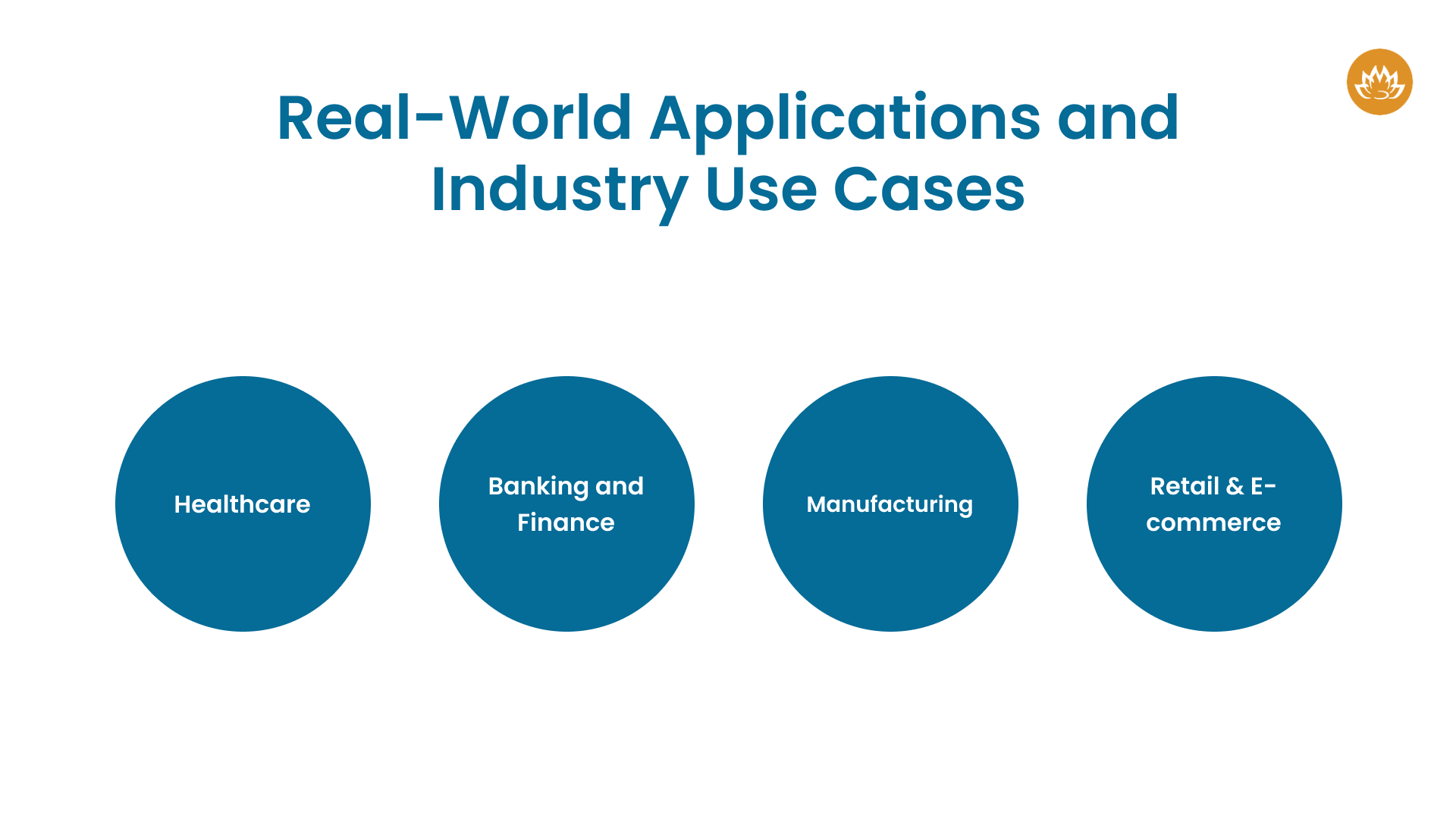
Real-World Applications and Industry Use Cases
Real-World Applications and Industry Use Cases

Healthcare

AI and automation are transforming the healthcare industry’s operational management and patient care.
  • AI-powered diagnostics help physicians by providing quicker and more precise analysis.
  • Chatbots manage follow-up care reminders and appointment scheduling.
  • Administrative duties like medical coding and insurance verification are streamlined by automation.
Nowadays, health organizations hire dedicated developers to build AI-driven healthcare apps for various users, such as patients, employees, staff, and financial departments.

Banking and Finance

Intelligent automation is being quickly adopted by financial institutions for customer service, fraud detection, and compliance.
  • In real time, AI models identify anomalous transaction patterns and highlight possible fraud.
  • Automated bots manage document verification, loan approvals, and KYC procedures.
  • AI-powered virtual assistants provide individualized banking experiences.
As a result, consumer happiness and security have significantly increased.

Manufacturing

AI and automation are being used by innovative industries to increase production to new heights.
  • Predictive maintenance prolongs the life of machines and reduces downtime.
  • Computer vision provides quality control by immediately identifying product flaws.
  • Waste is decreased through supply chain optimization and automated inventory management.
When combined, these developments result in operations that are more resilient, nimble, and economical.

Retail & E-commerce

Automation and artificial intelligence are changing the retail industry.
  • AI examines consumer behavior to enhance pricing and product selection.
  • Orders are filled more quickly and precisely in automated warehouses.Orders are filled more quickly and precisely in automated warehouses.
  • Virtual shopping assistants help customers decide what to buy.
By implementing these technologies, retailers may provide better consumer experiences and quickly adjust to market shifts.

Partner with Whitelotus Corporation For The Future of Your Business

Automation and artificial intelligence (AI) are not futuristic ideas; they are here and are changing the workplace and creating new opportunities. Tomorrow’s leaders will be the companies who take action now, rethinking their procedures, retraining their employees, and putting intelligent automation into place.
At Whitelotus Corporation, we specialize in custom AI and automation solutions that suit your particular business requirements. We can assist you at every stage, whether your goal is to create scalable digital platforms, automate tedious operations, or incorporate intelligent decision-making. Contact us today to learn more about our AI and Automation services.

Author

  • Sunil Chavda

    Sunil is a result-orientated Chief Technology Officer with over a decade of deep technical experience delivering solutions to startups, entrepreneurs, and enterprises across the globe. Have led large-scale projects in mobile and web applications using technologies such as React Native, Flutter, Laravel, MEAN and MERN stack development.

    View all posts

Don't skip sharing this post!

Inquiry now

    MAKING IT EXTRAORDINARY